
LOUISE 1 Oil Tanker Attacked with Explosive Devices in the Strait of Hormuz
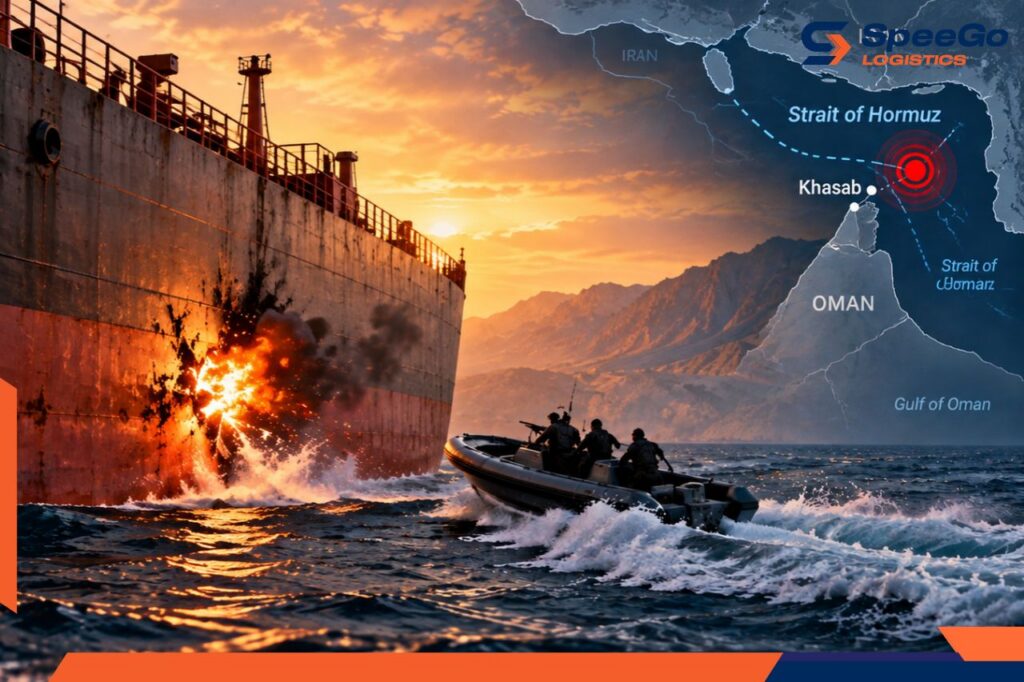
A Panama-flagged crude oil tanker, LOUISE 1, was approached by a small boat that attached two explosive devices to its hull while the vessel was transiting the Strait of Hormuz on October 29, 2026. The explosions caused a fire in the engine room, temporarily disabling the vessel. All crew members were safe, and the tanker subsequently resumed its voyage.
The incident occurred amid a series of incidents involving commercial vessels in the area throughout October. Earlier, two Singapore-registered container ships, GFS PRIDE and GFS GISELLE, were also struck by unidentified objects while transiting the Strait of Hormuz. GFS PRIDE subsequently sank.
These successive developments are raising concerns about maritime safety and the stability of one of the world’s most strategically important shipping routes.
According to the information released:
- Time: Approximately 22:12 UTC on October 29, 2026.
- Location: Approximately 25 nautical miles northeast of Khasab, Oman.
- Vessel involved: Louise 1, a Panama-flagged crude oil tanker. Reuters reported that the vessel’s identity was confirmed by three maritime security sources.
- Attack method: A small boat approached the vessel’s port side and attached two explosive devices (limpet mines) to the hull above the waterline.
- Consequences: Both devices detonated, causing a fire in the engine room and temporarily disabling the vessel’s maneuverability.
- Status after the incident: The fire was extinguished, the crew was safe, and no environmental damage was reported. The vessel resumed its voyage to its next port of call.
LOUISE 1 oil tanker attacked with explosive devices attached to its hull
According to information from the United Kingdom Maritime Trade Operations (UKMTO), the incident occurred on October 29, 2026, approximately 25 nautical miles northeast of Khasab, Oman, as the vessel was sailing out of the Strait of Hormuz.
A small boat approached the vessel’s port side and attached two explosive devices to the hull above the waterline. The devices subsequently detonated, causing a fire in the engine room and temporarily disabling the vessel
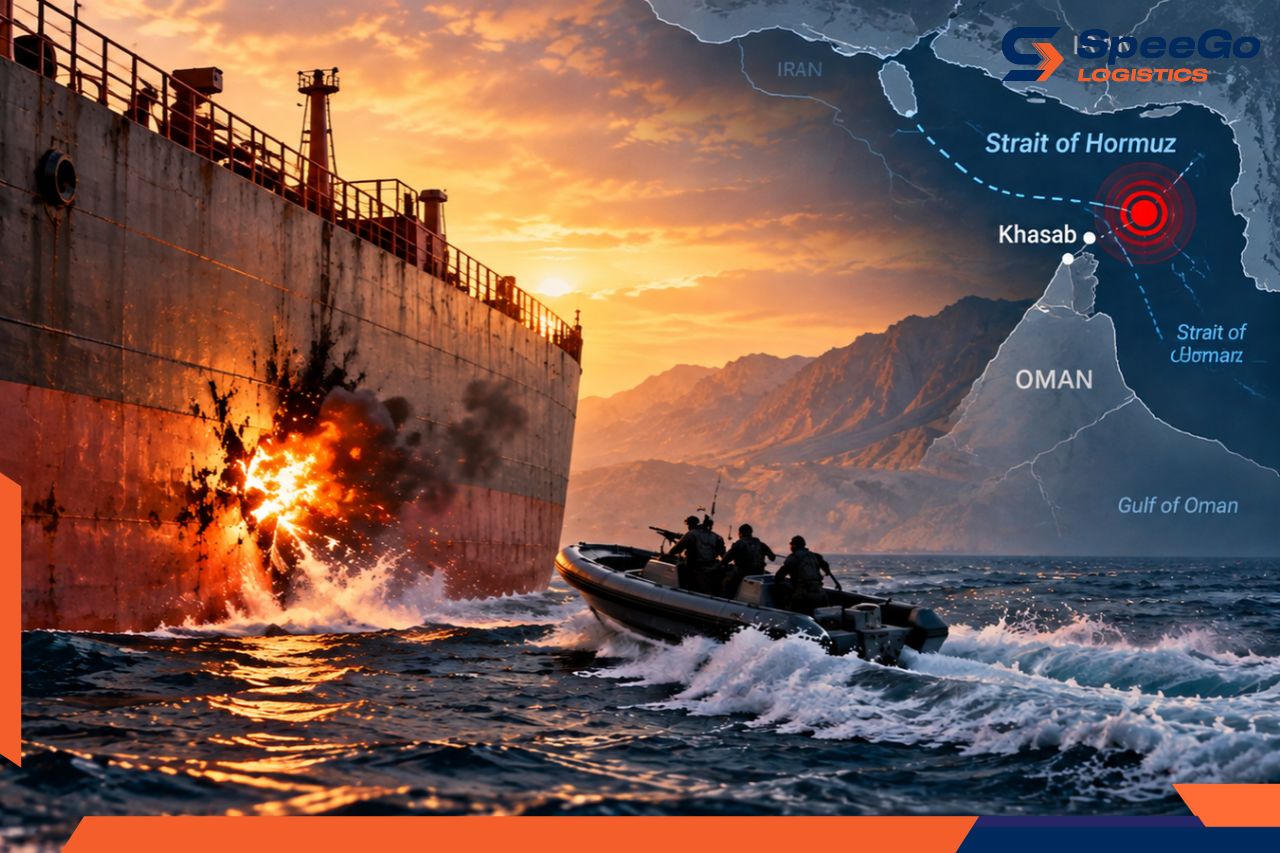
LOUISE 1 oil tanker attacked with explosive devices in the Strait of Hormuz. Illustrative image.
According to maritime security sources cited by Reuters, the vessel involved was identified as LOUISE 1, a crude oil tanker flying the Panamanian flag. The sources indicated that the devices used were limpet mines, explosives that can be attached directly to a vessel’s hull.
Following the explosions, the crew brought the fire under control. No casualties or environmental damage were reported. LOUISE 1 subsequently regained operational capability and continued its voyage to the next port.
UKMTO confirmed that the crew was safe, the fire had been extinguished, and there was no impact on the marine environment. However, the agency did not identify who was responsible for the incident.
The LOUISE 1 incident was not an isolated event in October 2026. Earlier, the Maritime and Port Authority of Singapore (MPA) reported that two Singapore-registered container ships had been struck by unidentified objects while transiting the Strait of Hormuz.
According to MPA’s announcement on October 14, 2026, GFS PRIDE and GFS GISELLE experienced separate incidents on October 13 and 14, respectively, Singapore time. Read more here.
Limpet mines: An emerging threat to commercial vessels?
One notable aspect of the LOUISE 1 incident was the use of a small boat to approach the vessel directly and attach explosive devices to its hull.
Unlike attacks involving missiles or unmanned aerial vehicles (UAVs) launched from a distance, this method requires the attacking vessel to get close enough to its target. The explosive devices are then attached directly to the hull and can cause significant damage, depending on their placement, explosive power, and the circumstances of the detonation.
According to Reuters, this was the first successful limpet mine attack reported in the Hormuz area since the US-Iran conflict began in February 2026. An earlier attempt to use a similar device in September was reportedly unsuccessful.
The ability of a small boat to approach a moving vessel, deploy explosive devices, and withdraw presents a significant challenge for maritime surveillance and the protection of commercial vessels, particularly along busy shipping lanes.
However, there is not yet sufficient evidence to conclude that this method will become a widespread form of attack or to identify those responsible for the incident.
Risks to maritime transport and international supply chains
The Strait of Hormuz connects the Persian Gulf with the Gulf of Oman and the Arabian Sea. It is a strategically important shipping route for the global transportation of crude oil and liquefied natural gas (LNG).
The successive incidents involving commercial vessels in this area could create several risks for maritime transport and international supply chains.
Rising security risks for commercial vessels
The incidents involving LOUISE 1, GFS PRIDE, and GFS GISELLE show that maritime security risks are not limited to oil tankers but may also affect container ships and other types of commercial vessels.
This highlights the growing need for route risk assessments, monitoring maritime security alerts, and developing incident response plans.
Pressure on insurance and vessel operating costs
As security risks increase along a shipping route, war risk insurance premiums and other vessel operating costs may come under upward pressure.
Shipping companies, vessel owners, and insurers need to reassess risk exposure based on the specific area, voyage, and timing of transportation.
Potential disruptions to shipping schedules
Security alerts, requests to change routes, or decisions to restrict operations in high-risk areas may affect transit times.
For importers and exporters, vessel delays or route changes may require adjustments to cargo receipt, inventory management, and distribution plans.
Potential impact on energy markets
Hormuz is one of the world’s most important energy transit chokepoints. Prolonged instability in the area could affect market expectations for oil and gas supplies, transportation costs, and energy prices.
These developments could also indirectly affect logistics costs and trade activities in industries that rely heavily on energy.
What should importers and exporters monitor?
In light of developments in the Strait of Hormuz, businesses involved in international transportation should proactively monitor and assess the following factors:
- Maritime security alerts: Monitor updates from UKMTO, national maritime authorities, and shipping companies regarding high-risk areas.
- Shipping schedules: Coordinate with shipping lines or freight forwarders to stay informed about potential route changes, departure schedules, and port arrival times.
- Insurance costs: Review cargo insurance coverage, war risk provisions, and potential additional costs if shipping routes change.
- Contract terms: Review clauses covering delivery delays, force majeure, the responsibilities of each party, and additional costs.
- Inventory planning: For goods with long lead times or a heavy reliance on ocean freight, businesses should consider contingency plans to reduce the risk of inventory shortages.
Proactive monitoring and coordination with logistics partners can help businesses better assess risks that may affect their cargo transportation and delivery plans.
Conclusion
The attack on the LOUISE 1 oil tanker, together with the incidents involving GFS PRIDE and GFS GISELLE in October 2026, highlights increasingly significant maritime security challenges in the Strait of Hormuz.
Given the route’s importance to global trade and energy transportation, importers, exporters, shipping companies, and logistics providers should closely monitor security alerts, assess transportation risks, and prepare appropriate contingency plans.
References:
- Reuters – Tanker in Strait of Hormuz hit by limpet mines, security sources say
- UKMTO – Maritime security alert regarding the tanker incident northeast of Khasab, Oman.
Follow SpeeGo Logistics for the latest updates on ocean freight, logistics, and global supply chains.
