
Shipping From Vietnam to Australia: Costs and transit times
Shipping from Vietnam to Australia is handled mainly through three modes: sea freight, air freight, and express courier. Depending on the cargo, importers can choose sea freight (about 15 – 35 days) to save on freight costs, or air freight to cut transit time as much as possible.
To help your business plan its shipments, this guide from SpeeGo answers the key questions: What costs go into shipping from Vietnam to Australia? How long does it take? Which shipping mode should you choose? What does the process look like in practice? And what do you need to know about Australian import regulations?
What are the steps in the Vietnam to Australia shipping process?
The 5-step shipping process from Vietnam to Australia
Importing goods from Vietnam to Australia typically involves five core steps. Each stage requires close coordination between the shipper and the freight forwarder or logistics provider, especially on documentation and clearance at both ends of the lane:
- Step 1: Collect shipment details (commodity, weight, dimensions), confirm the shipping plan, and issue a quote;
- Step 2: Handle cargo in Vietnam: arrange pickup, packing or palletizing, fumigation if required, and export customs clearance;
- Step 3: Move the cargo internationally: book air cargo space, or secure the ocean booking and empty container release;
- Step 4: Complete import customs clearance and strict biosecurity inspection in Australia;
- Step 5: Deliver within Australia: drayage or trucking to the consignee’s warehouse.
Let’s look at what happens at each stage in more detail.
Origin handling in Vietnam
- Sea freight: Cargo is consolidated at Cat Lai or Cai Mep port (southern Vietnam) or Hai Phong port (northern Vietnam);
- Air freight: Cargo departs from Tan Son Nhat Airport (SGN) or Noi Bai Airport (HAN).
Note: The nearest port is not always the cheapest. Balance inland trucking costs against vessel schedules to find the most cost-effective option.
International routing to Australia
Cargo typically arrives directly at three main ports: Melbourne, Sydney, and Brisbane. Fremantle and Adelaide are also available.
Note: Australia is a large country, and inland transport costs are high. Choose a port of discharge (POD) as close to the consignee’s warehouse as possible to reduce last-mile delivery costs.
Customs clearance and delivery in Australia
- Declaration and duty payment: Every shipment valued above AUD 1,000 must be declared through the Integrated Cargo System (ICS). Australian customs releases the cargo only after the importer pays all applicable duties, taxes, and fees;
- Delivery: Once customs clearance and biosecurity inspection are complete, the cargo is released from the terminal or warehouse and delivered to the consignee.
What costs are included in shipping from Vietnam to Australia?
How Vietnam to Australia sea freight is priced
The total cost of a shipment goes beyond the main international freight charge. A complete pricing structure includes ocean or air freight, local charges at origin (Vietnam) and destination (Australia), customs duties, and domestic delivery.
When comparing quotes from different providers, confirm that each one covers the same scope of services. This helps you avoid hidden surcharges.
How is sea freight from Vietnam to Australia priced?
Sea freight rates from Vietnam to Australia are based on two shipping options: FCL (full container load) and LCL (less than container load).
- FCL: Priced as a flat rate per container type (most commonly 20-foot and 40-foot). FCL suits large volumes and bulky cargo. The rate stays the same even if the container is not full;
- LCL: Suited to smaller shipments or cargo consolidated from multiple suppliers. Rates are based on volume (CBM, or cubic meters) or actual weight (kg), whichever produces the higher charge. LCL usually comes with a minimum charge.
| Shipping option | How freight is priced | Best for |
| FCL | Per 20-foot or 40-foot container | Large volumes, bulky cargo |
| LCL | Per CBM or kg | Small shipments, multiple suppliers |
How to calculate CBM (cubic meters):
Formula: Length × Width × Height (m) × Number of cartons
Example: A business ships 10 cartons, each measuring 0.8 m × 0.6 m × 0.5 m. The shipment volume is 0.8 × 0.6 × 0.5 × 10 = 2.4 CBM.
At SpeeGo Logistics, quotes are built to be transparent. We separate freight charges from additional fees, so your team can compare quotes easily and manage your budget.
How is air freight from Vietnam to Australia priced?
Air freight cost depends on more than weight alone. Carton dimensions also affect the rate.
Logistics providers quote air freight based on chargeable weight, which is the greater of the following:
- Actual weight (kg)
- Volumetric weight: [Length × Width × Height (cm)] / 6,000
Air freight also rewards volume. The larger the shipment, the lower the average rate per kg. The table below illustrates the pricing pattern:
| Chargeable weight | 10 kg | 100kg | 300kg |
| Estimated rate per kg | $96.59 | $12.81 | $7.47 |
What additional charges apply besides the main freight rate?
Besides the freight rate, a shipment can incur the following charges:
- Pickup, packing, and export customs clearance fees in Vietnam;
- Port charges, CFS (container freight station) fees, and handling fees in Australia;
- Customs clearance and biosecurity inspection fees;
- Import duties and GST;
- Cargo insurance, typically 2 – 3% of (cargo value + freight);
- Delivery fees to the consignee’s address.
To keep costs down, businesses can:
- Book early and avoid peak season;
- Prepare complete documentation for faster customs clearance;
- Classify goods with the correct HS code so duties can be estimated in advance;
- Compare quotes that cover the same scope of services.
How long does shipping from Vietnam to Australia take?
Estimated transit times from Vietnam to Australia
Shipping time from Vietnam to Australia depends heavily on the mode you choose. In general, sea freight is the economical option at about 15 – 35 days, while air freight is the fastest option at about 4 – 11 days.
Note: The transit times below are general estimates. Actual schedules vary by port or airport pair, carrier schedules, and external factors such as weather and port congestion.
Sea freight transit times by port pair
The ocean leg alone, which excludes pickup, export and import clearance, and domestic delivery, typically takes 12 to 21 days from Vietnam to Australia. Total door-to-door transit by sea freight is about 20 – 35 days.
| Origin port | Destination port | Estimated transit time |
| Ho Chi Minh City (Cat Lai) | Fremantle | 12 days |
| Ho Chi Minh City (Cat Lai) | Sydney | 15 days |
| Ho Chi Minh City (Cat Lai) | Brisbane | 16 – 20 days |
| Ho Chi Minh City (Cat Lai) | Melbourne | 17 days |
| Cai Mep (Vung Tau) | Melbourne | 21 days |
How long does air freight take?
Air freight is the best fit for high-value goods, samples, and urgent shipments. Transit time falls into two main categories:
- Direct flights: Including wait time for the flight and customs clearance at both ends, your shipment takes only about 1 – 2 days;
- Connecting flights: If cargo routes through a transshipment hub such as Singapore, Kuala Lumpur, or Hong Kong before reaching Australia, transit takes about 3–5 days because of connection waits.
With door-to-door service, which includes truck pickup at your factory in Vietnam and delivery to the consignee’s warehouse in Australia, total transit takes about 4 – 11 days. The range depends on whether the delivery address in Australia is in a metro area or a remote area.
What does SpeeGo Logistics’ Vietnam to Australia freight forwarding service include?
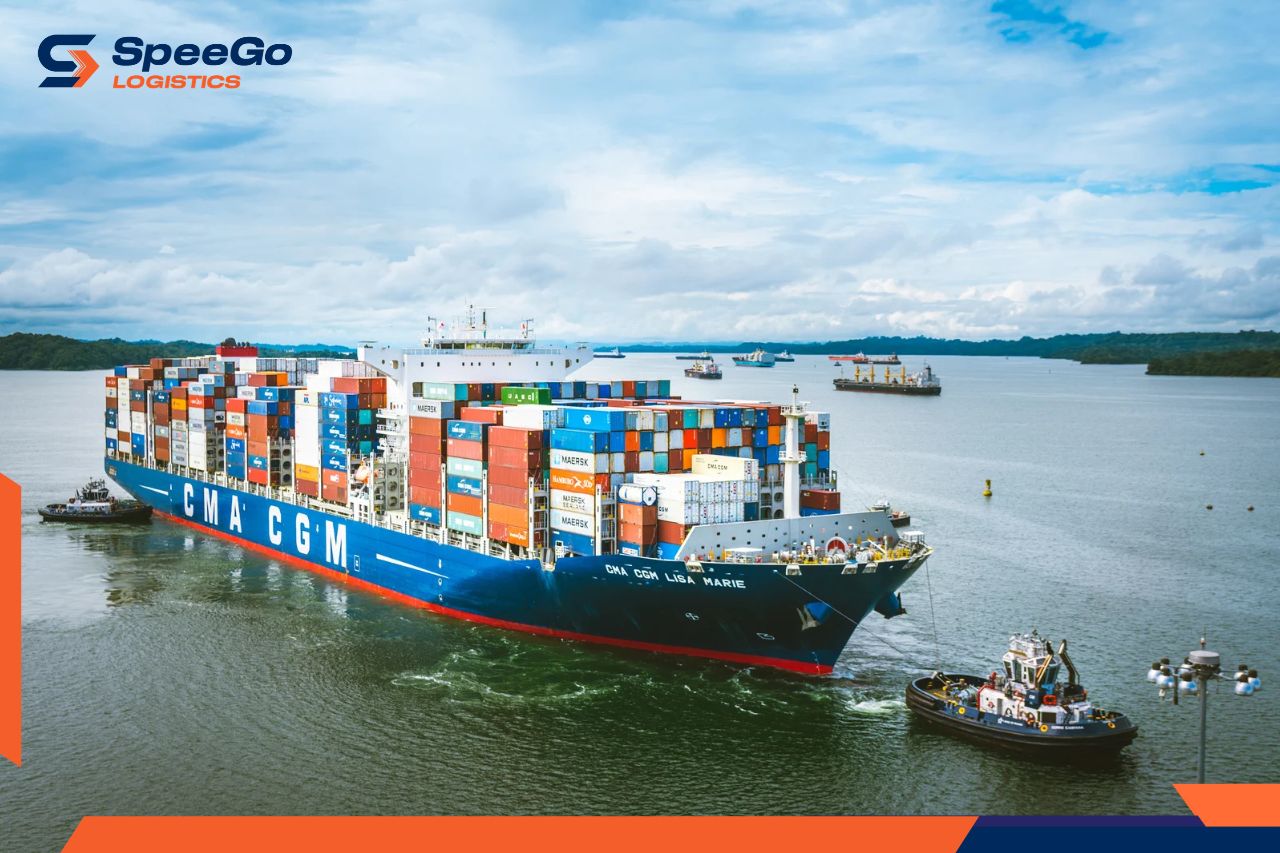
SpeeGo Vietnam to Australia freight forwarding services
SpeeGo Logistics is a U.S.-based international freight forwarder. We provide supply chain solutions for exports from Vietnam to key markets including Australia, the U.S., and Canada.
On the Vietnam to Australia lane, SpeeGo serves ecommerce sellers who sell globally, the Vietnamese diaspora, and Australian businesses.
Which parts of the shipment does SpeeGo handle?
To give customers an end-to-end solution, SpeeGo Logistics directly handles the following:
- International multimodal transport: Sea freight (FCL and LCL) and air freight;
- Sourcing and quality control (QC);
- Fulfillment services;
- Customs brokerage: Export and import customs clearance at both ends.
How does SpeeGo help with Australian import regulations?
To protect your cargo from being held, fined, or destroyed at an Australian port, SpeeGo’s specialists control risk from the start, before the cargo leaves Vietnam. Our support includes:
- Document review: Cross-checking HS codes and verifying the commercial invoice, packing list, and certificate of origin;
- Packing and biosecurity compliance: Advising on packing that meets international shipping safety standards;
- Import compliance guidance: Advising customers on prohibited and restricted goods, and helping estimate import duty and GST thresholds so businesses can optimize cash flow.
What information do you need to get a quote for shipping from Vietnam to Australia?
To receive an accurate and competitive quote from SpeeGo, please provide the following:
- The exact pickup address (in Vietnam) and delivery address (in Australia);
- Shipment details: commodity description, HS code (if available), quantity, dimensions, weight, and commercial value;
- The estimated cargo-ready date and the Incoterms you want to use.
Once we have all the information, the SpeeGo team will review your request and send a detailed quote within 24 business hours.
Shipping goods from Vietnam to Australia requires careful preparation for customs clearance and biosecurity inspection. To avoid demurrage, storage charges, and fines, it is essential to choose a logistics partner that knows the market. With end-to-end freight forwarding, SpeeGo Logistics is committed to safe, transparent, and cost-efficient shipping.
Contact SpeeGo Logistics today for a free consultation and a detailed quote. You can also follow the SpeeGo website for more updates on shipping and importing.
