
End-to-end Vietnam shipping to USA solutions for businesses
Vietnam shipping to USA is handled through three main modes: ocean freight, air freight, and express delivery.
To help importers and businesses choose the right option, SpeeGo breaks down each mode in this article, including how transit time and freight cost compare. We also walk through U.S. customs clearance and the import duty rules that apply.
Why is demand for shipping from Vietnam to the US growing so quickly?
Why shipping from Vietnam to the US is booming
Demand for Vietnam shipping to the US is rising sharply, driven by four main factors:
- Booming bilateral trade: The U.S. is Vietnam’s largest export market. Leading categories include apparel and textiles, wood furniture, agricultural products, and electronic components;
- Cross-border e-commerce growth: More Vietnam-based sellers are joining platforms such as Amazon, Etsy, and eBay, which generates a large volume of international shipments;
- B2B demand for supplies and commercial equipment: Growth in U.S. service and retail industries has increased demand for products Vietnam is known for. Distributors and partners regularly place bulk orders for nail-industry supplies, cosmetics, furniture, and manufacturing materials;
- Global supply chain shifts: As major companies move production to Vietnam, the volume of samples and B2B cargo shipped to the U.S. has risen sharply.
What are the shipping options from Vietnam to the US?
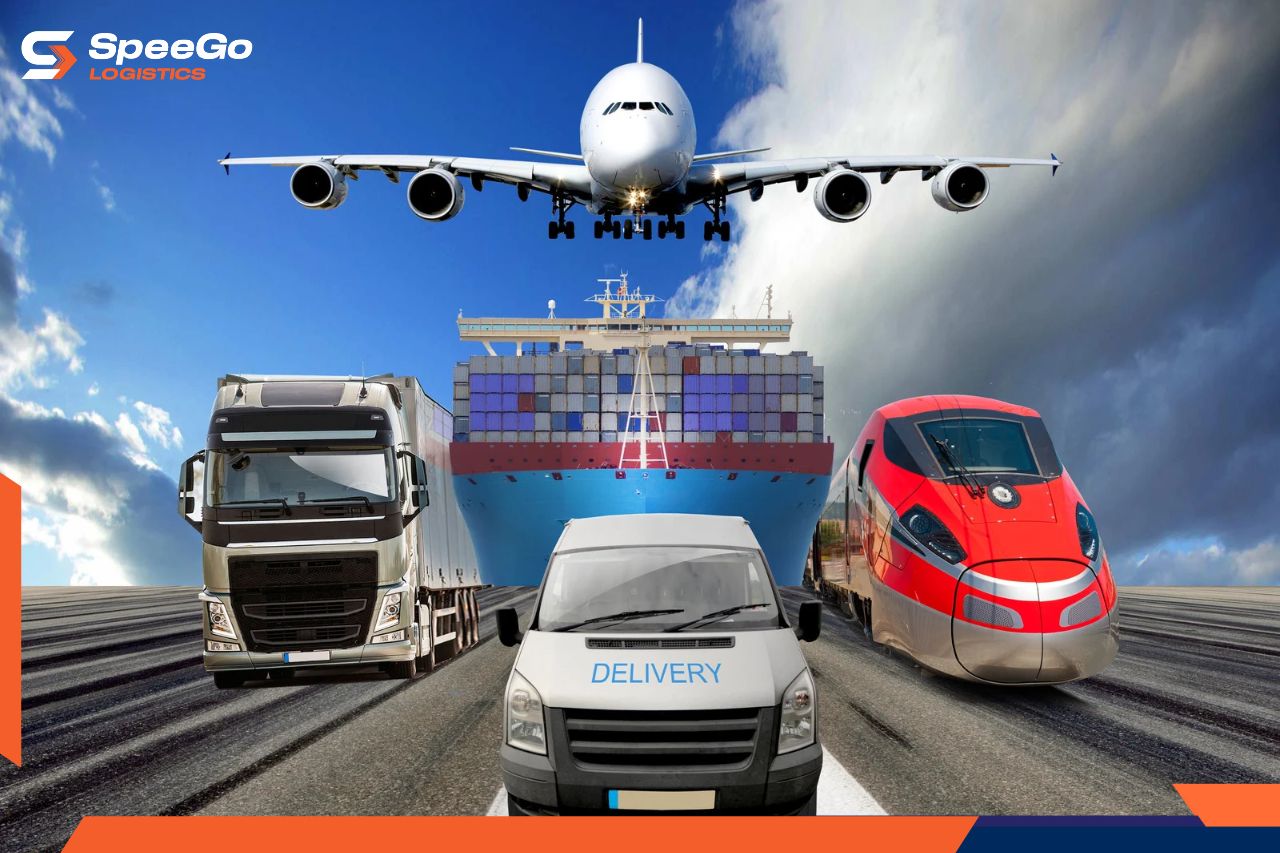
Main shipping options from Vietnam to the US
Businesses can choose from several transport modes to ship from Vietnam to the USA. The decision usually comes down to three factors: cargo characteristics (volume and dimensions), budget, and delivery timeline.
Ocean freight
Ocean freight is the most economical and widely used option. It is best suited to large commercial shipments, such as furniture or bulk nail-industry supplies.
- FCL (full container load): You use one or more 20-foot or 40-foot containers at a fixed rate. FCL offers better cargo security and shorter transit times, since there is no wait for consolidation and deconsolidation;
- LCL (less than container load): This is the most cost-effective choice for smaller shipments that do not fill a container. Your cargo is consolidated with other shippers’ freight. Transit usually takes a few extra days to cover consolidation at the origin port and deconsolidation at the destination port.
Air freight
Air freight is the fastest option. It suits high-value, lightweight cargo and urgent B2B orders, such as samples sent to a business partner. For the best cost efficiency, air freight is recommended for shipments under 2 CBM and under 200 kg.
- Express air service: Priority handling with the shortest total transit time. It suits urgent orders and carries a higher rate;
- Economy air service: Lower freight cost, but longer waiting and transit times than the express service.
Should you ship by sea or by air?
How to choose between ocean and air freight
Choose ocean freight for large, non-urgent shipments. Choose air freight for high-value cargo or when you need faster delivery. The table below compares the two modes.
| Criteria | Ocean freight | Air freight |
| Shipment size | Medium to large | Small to medium |
| Urgency | Flexible | Time-sensitive |
| Cost | Lower | Higher |
| Cargo type | Durable, non-urgent | High-value, fragile or perishable |
| Transit time | 20 – 35 days | 2 – 6 days |
At SpeeGo, we offer both ocean freight and air freight. Based on your cargo, delivery schedule, and budget, our team recommends the most suitable shipping solution to keep delivery efficient and costs under control.
4 factors that determine your shipping method
To choose the right shipping method, businesses should evaluate four key factors:
- Geographic location: The distance from your warehouse to the seaport or airport directly affects inland transport cost and time;
- Cargo characteristics: Compact, high-value goods (samples, components) are a good fit for air freight. Bulky, high-volume goods (furniture, nail supplies) are better suited to ocean freight;
- Delivery timeline: Air freight meets urgent deadlines. Ocean freight works for planned, flexible schedules;
- Shipping budget: Ocean freight lowers cost for large orders. Air freight costs more but delivers faster.
When should you choose FCL vs. LCL?
The choice between FCL (full container) and LCL (less than container load) mainly depends on shipment volume, measured in CBM:
- Choose LCL: When your shipment is under 13 – 15 CBM. It saves cost on smaller orders;
- Choose FCL: When your shipment is over 13 – 15 CBM. It reduces the risk of damage and shortens transit time because there is no cargo consolidation.
New businesses often start with LCL and move to FCL as their export volume grows and stabilizes.
How long does shipping from Vietnam to the US take?
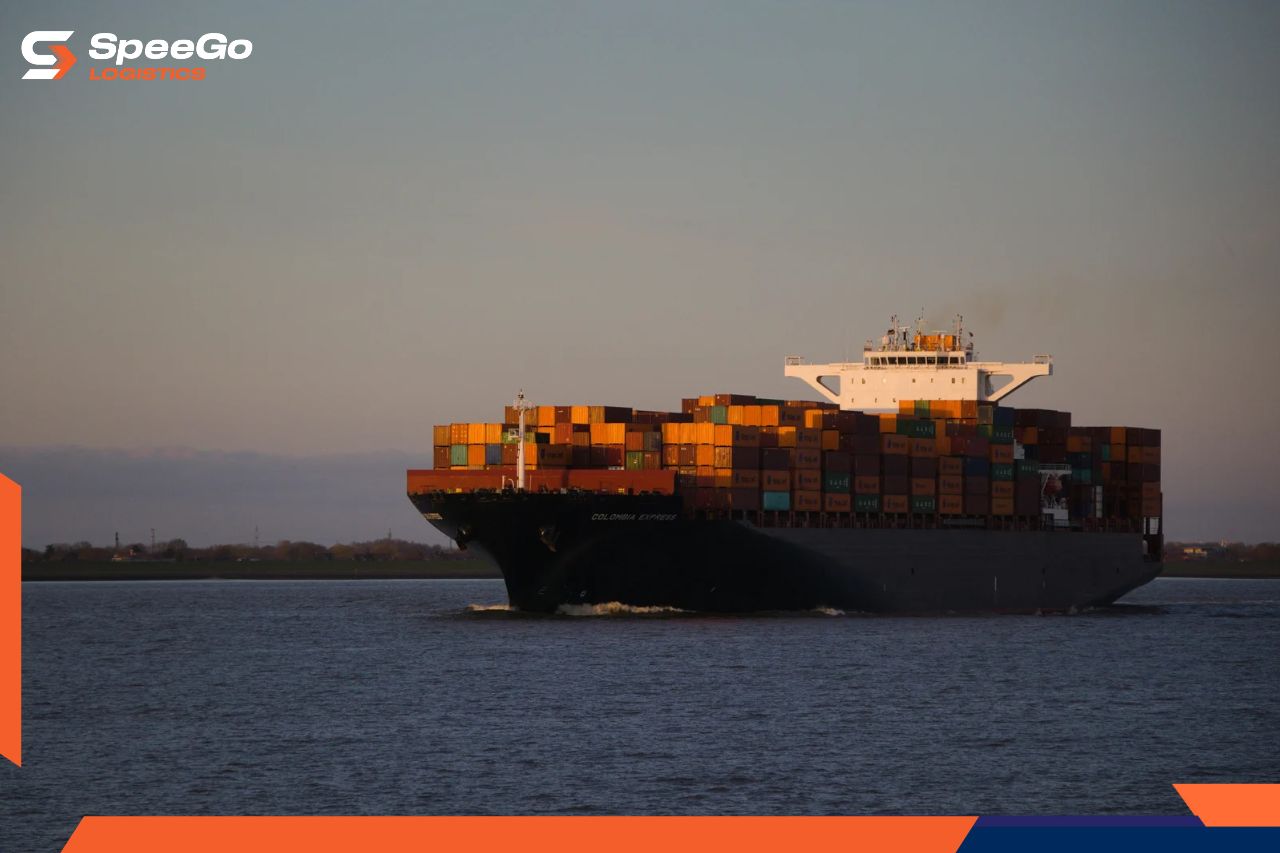
Estimated transit times from Vietnam to the US
| Mode | Port to port | Door to door |
| Ocean freight (FCL) | 24 – 29 days | 37 – 41 days |
| Ocean freight (LCL) | 18 – 38 days | 28 – 33 days |
| Air freight | 3 – 8 days | 8 – 16 days |
Note: Actual transit time also depends on the trade lane and the season.
Ocean freight transit time by trade lane
| Origin port | Destination port | Estimated transit time |
| Ho Chi Minh City | Los Angeles, Long Beach | 20 – 25 days |
| Ho Chi Minh City | Houston | 25 – 30 days |
| Ho Chi Minh City | New York | 35 – 40 days |
| Hai Phong | Los Angeles, Long Beach | 25 – 30 days |
What factors can delay your shipment?
Five factors commonly cause shipments to run behind schedule:
- Incorrect or missing documents, which can add several days;
- Bad weather and storm season;
- Reduced vessel schedules during holidays;
- Peak seasons such as Lunar New Year (Tet) and Black Friday;
- Congestion at the Ports of Los Angeles and Long Beach.
How much does shipping from Vietnam to the US cost?

Factors that determine shipping costs from Vietnam to the US
Three factors determine the shipping fee: transport mode, shipment weight, and trade lane. For air freight in particular, the rate per kg decreases as shipment weight increases, which helps businesses lower their unit cost.
What factors determine freight rates?
- Transport mode;
- Weight and dimensions;
- Trade lane and distance;
- Cargo type, such as dangerous goods or perishables;
- Cargo insurance;
- Peak season;
- Additional services, such as last-mile delivery and customs clearance.
How can you reduce shipping costs?
- Book space early;
- Ship outside peak season;
- Prepare complete documentation;
- Confirm the correct HS code;
- Compare quotes from multiple providers;
- Ask exactly what each quote includes.
At SpeeGo Logistics, all costs are agreed in writing in the contract before operations begin. We commit to no hidden fees throughout the shipment, so you can plan your budget and cash flow with confidence.
How do you choose an international shipping provider from Vietnam to the US?
Businesses new to this trade lane should choose a provider with Vietnam–US experience, transparent quotes, and a full range of services. For a smooth, cost-efficient supply chain, work with a freight forwarder that meets the following criteria.
Criteria for evaluating a shipping provider
- Experience and reputation;
- Services that match your needs;
- Transparent pricing with no hidden fees;
- Responsive customer support;
- Proper licensing and credentials;
- A broad partner network.
What does SpeeGo’s Vietnam – US transport service include?
SpeeGo Logistics provides supply chain and transport solutions on one-way routes from Vietnam and China to the US, Canada, and Australia.
We support exporters through an integrated service portfolio:
- International shipping (ocean freight and air freight);
- Customs brokerage at both origin and destination;
- Fulfillment;
- Sourcing and quality control (QC).
Vietnam shipping to the US comes down to two main options: ocean freight for large, non-urgent cargo, and air freight for cargo that needs to arrive sooner. Businesses new to this trade lane should weigh volume, timeline, cost, documentation, and import duties before choosing a method.
Contact SpeeGo Logistics for a free consultation and an instant quote for your shipment. Follow speegologistic.com for more insights on international shipping.
