
100+ Essential Shipping & Logistics Terms Every Beginner Should Know
When you start learning about logistics and international trade, you will frequently come across terms such as ETA, ETD, FCL, LCL, Bill of Lading (B/L), and Incoterms in freight quotations, emails with business partners, and shipping documents.
If you do not understand what these terms mean, it can be difficult to compare shipping options, estimate costs, or track a shipment.
Shipping & Logistics terminology refers to the specialized words and expressions used in transportation, freight forwarding, warehousing, supply chain management, and international trade.
What are the most important shipping & logistics terms?
In this guide, SpeeGo brings together more than 100 commonly used logistics terms, with clear definitions and practical explanations to help you build a solid foundation and apply these concepts in real-world situations.
We’ve organized these terms into separate categories based on their business functions to make them easier for you to navigate and reference!
1/ Basic Logistics and Supply Chain Terms
Logistics and Supply Chain are two fundamental concepts, but they are not exactly the same. First, you need to understand the differences between these two terms:
- Logistics: Focuses on the transportation, storage, and coordination of goods.
- Supply Chain: Covers the broader network of activities, from sourcing raw materials to delivering products to end customers.

What are the most basic shipping & logistics terms?
Some key terms in this category that you should be familiar with include:
Supply Chain Management (SCM): Supply chain management involves coordinating activities and resources across the entire supply chain.
Logistics Management: Logistics management involves planning and managing logistics activities, such as transportation and warehousing, to ensure the flow of goods from suppliers to their destinations.
Freight: This term generally refers to the transportation of goods and, in some contexts, the charges for transporting goods.
Freight Forwarder: A freight forwarder is a company that arranges cargo transportation and coordinates related services.
Third-Party Logistics (3PL): A business model in which a company outsources logistics activities to a third-party provider, such as warehousing, inventory management, transportation, customs documentation, and freight forwarding.
Fourth-Party Logistics (4PL): A business model in which a company hires a provider to manage its overall supply chain operations, including the activities of 3PL providers.
Shipper: The person or entity sending goods, or the party identified as the shipper in the relevant transaction and shipping documents.
Consignee: The person or entity designated to receive the goods in the shipping documents or transportation agreement.
Carrier: A person or company that transports goods under a contract or within an agreed service scope.
Vendor/Supplier: A provider of goods, raw materials, or products.
Lead Time: The period between the start and completion of a specific process.
Last-Mile Delivery: The final stage of delivery, from the last distribution point to the recipient.
Reverse Logistics: The process of managing the return flow of goods for returns, repairs, or recycling.
Practical Example: A Vietnamese Business Imports Clothing from a Supplier in China
In this scenario:
- The Chinese company supplying the clothing is the Vendor or Supplier.
- The party sending the goods is the Shipper.
- The Vietnamese business importing the clothing is the Consignee.
- The Freight Forwarder arranges the transportation.
- The Carrier physically transports the goods to Vietnam.
2/Shipping Methods Terms
The mode of transportation can directly affect shipping costs, delivery times, and the ability to meet the specific requirements of different types of cargo.
Beyond selecting the most suitable mode, businesses also need to understand that a shipment may involve multiple transportation legs or transshipment points.

What are the key terms related to transportation modes?
Below are some common logistics terms related to freight transportation methods:
Sea Freight / Ocean Freight: The transportation of goods by sea.
Air Freight: The transportation of goods by air.
Road Freight: The transportation of goods by road.
Rail Freight: The transportation of goods by rail.
Inland Waterway Transport: The transportation of goods via inland waterways, such as rivers, canals, and other navigable inland routes.
Multimodal Transport: The transportation of goods using two or more modes of transport within a single journey.
Intermodal Transport: The transportation of goods using multiple modes of transport, typically with the goods remaining in the same loading unit, such as a container, while changing modes. Multiple transport operators may be involved.
Transshipment: The transfer of cargo from one vessel or mode of transport to another at an intermediate hub or transit point.
Transit Shipment: A shipment that is in transit or passes through a territory en route to its final destination, depending on the context.
Cross-Border Transport: The transportation of goods across national borders.
Door-to-Door: A shipping service that covers the movement of goods from the specified origin address to the final destination address, according to the agreed service scope.
Port-to-Port: A shipping service that transports goods from the port of origin to the destination port.
Port-to-Door: A shipping service that moves goods from the port of origin to the final delivery address.
Door-to-Port: A shipping service that moves goods from the specified pickup address to the destination port.
Practical Example: A US Business Imports a Shipment of Cosmetics from a Factory in China to Its Warehouse in Los Angeles
In this scenario:
- Ocean Freight or Air Freight is the primary international transportation mode.
- Road Freight is used for domestic transportation, such as moving goods from the factory to the departure port or airport, or from the arrival port or airport to the warehouse.
- Door-to-Door describes the service covering the shipment from the factory to the business’s warehouse, provided both locations are included in the agreed service scope.
3/ Container and Cargo Loading Terms
In ocean freight, businesses often need to choose between shipping a full container and sharing container space with other shipments. They must also select the appropriate container type based on the cargo’s dimensions, weight, and storage or handling requirements.
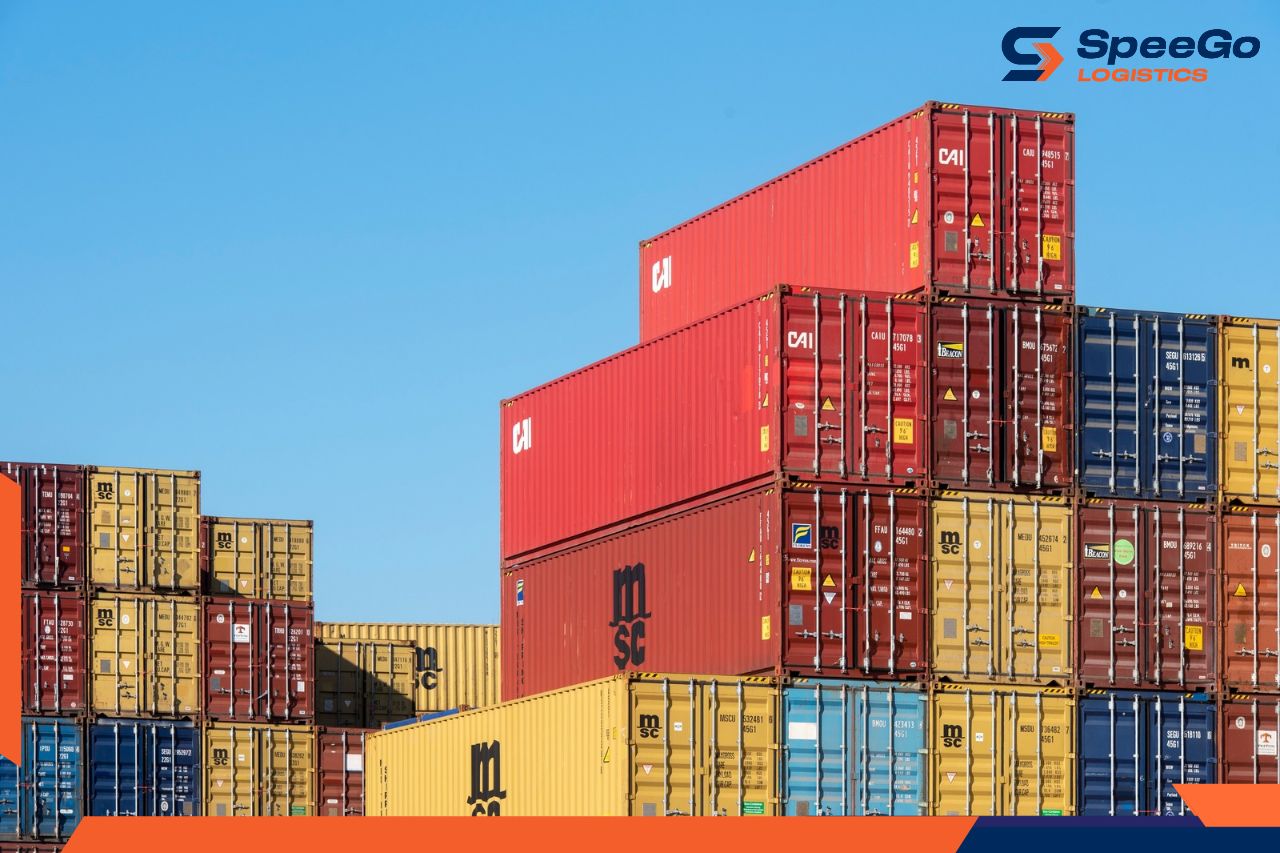
What are the key terms related to common container types in logistics?
Below are some common terms related to containers and cargo loading:
Full Container Load (FCL): A shipping arrangement in which a shipment uses an entire container.
Less than Container Load (LCL): A shipping arrangement in which a shipment shares container space with cargo from other shippers.
Twenty-foot Equivalent Unit (TEU): A standard unit used to express container capacity equivalent to one 20-foot container.
Forty-foot Equivalent Unit (FEU): A unit used to represent the capacity of one 40-foot container.
Dry Container: A standard enclosed container used for a wide range of cargo that does not require temperature control.
High Cube Container (HC): A container that is taller than a standard container of the corresponding length.
Reefer Container: A refrigerated container designed to transport cargo requiring temperature control.
Open Top Container: A container with an open or removable roof, allowing certain types of cargo to be loaded from above.
Flat Rack Container: A container with a flat base and end walls or posts, designed for certain oversized or unusually shaped cargo that cannot easily fit into a standard enclosed container.
Tank Container: A specialized container designed to transport liquids or other cargo compatible with its tank design and applicable safety standards.
Shipper-Owned Container (SOC): A container owned or leased by the shipper or cargo owner rather than supplied by the carrier.
Carrier-Owned Container (COC): A container owned by the shipping carrier.
Payload: The maximum cargo weight that can be carried, subject to the applicable container and transport weight limits.
Tare Weight: The weight of an empty container or packaging, excluding its contents.
Gross Weight: The total weight within a defined scope, typically including the goods and their packaging. For a packed container, the gross weight may include the cargo, packaging, and container, depending on the context.
Cubic Meter (CBM): A unit of volume equal to one cubic meter, commonly used to measure cargo volume.
Verified Gross Mass (VGM): The verified total gross mass of a packed shipping container, including its cargo, packaging, and securing materials, as well as the container’s tare weight, in accordance with the International Maritime Organization (IMO) requirements.
4/ Shipping Schedules, Transit Times, and Tracking Terms
During the shipping process, ETA, ETD, and Transit Time are commonly used in freight quotations and vessel schedule updates.
Understanding these time-related terms helps businesses plan warehouse receiving, production, and customer deliveries while distinguishing between scheduled estimates and actual outcomes.

What are the key terms related to shipping schedules, transit times, and tracking?
Below are some key logistics terms in this category:
Estimated Time of Departure (ETD): The estimated departure time of a vessel, vehicle, or shipment.
Actual Time of Departure (ATD): The actual departure time of a vessel, vehicle, or shipment.
Estimated Time of Arrival (ETA): The estimated arrival time at a specified destination.
Actual Time of Arrival (ATA): The actual arrival time at a specified destination.
Transit Time: The time required for a shipment to travel along a specified route or transport leg.
Cut-off Time: The deadline for completing a specific shipping-related process or submitting the required information.
Container Yard Cut-off (CY Cut-off): The deadline for delivering a container to the designated container yard, as specified by the port or shipping line schedule and requirements.
Shipping Instructions Cut-off (SI Cut-off): The deadline for submitting shipping instructions required to prepare the bill of lading.
Verified Gross Mass Cut-off (VGM Cut-off): The deadline for submitting the verified gross mass (VGM) of a packed shipping container.
Tracking Number: A unique identifier used to look up the status and movement of a shipment or parcel.
Shipment Status: The current stage or condition of a shipment as reported in the tracking system.
Schedule Reliability: A measure of how consistently actual transportation schedules align with planned schedules.
Blank Sailing: A scheduled vessel sailing that is canceled by the shipping line and removed from the published sailing schedule.
5/ Shipping and International Trade Documents Terms
Shipping and trade documents provide the information needed for parties to verify shipment details, arrange transportation, complete customs procedures, and finalize cargo delivery.
Each document serves a specific purpose. The documents required for a shipment depend on the type of goods, mode of transport, contractual terms, and requirements of the destination market.

What are the key terms related to shipping and import-export documents?
There are many terms related to shipping documentation and import-export operations. The following are some of the essential concepts anyone interested in logistics should understand:
Bill of Lading (B/L): A transport document used in ocean freight that can serve as a receipt for goods, evidence of the contract of carriage, and, in certain cases, a document of title to the goods.
Sea Waybill (SWB): A sea transport document that serves as evidence of receipt of the goods and the contract of carriage but is not a negotiable document of title like a negotiable original bill of lading.
Air Waybill (AWB): An air transport document that records shipment details and the carriage of goods by air.
House Bill of Lading (HBL): A bill of lading typically issued by a freight forwarder or non-vessel-operating common carrier (NVOCC).
Master Bill of Lading (MBL): A bill of lading typically issued by the shipping line or the relevant ocean carrier.
Commercial Invoice: A document that records the details of a commercial transaction and the value of the goods.
Packing List: A document describing the shipment’s packages, packing details, weight, and dimensions.
Certificate of Origin (C/O): A document certifying the country in which goods originate, in accordance with the applicable rules of origin.
Certificate of Quality (C/Q): A document certifying the quality of goods against specified standards or requirements.
Shipping Instructions (SI): Instructions provided by the relevant party containing the shipment details needed to prepare the bill of lading or other transport documentation.
Arrival Notice: A notification issued by the carrier or another relevant party to inform the consignee or other designated party that a shipment is expected to arrive.
Delivery Order (D/O): An order or document authorizing or facilitating the release and collection of cargo, subject to the applicable procedures.
Proof of Delivery (POD): Evidence confirming that a shipment has been delivered to the designated recipient.
Cargo Manifest: A document listing the cargo carried by a vessel, aircraft, or other means of transport.
Customs Declaration: A declaration containing information required by customs authorities to process goods entering or leaving a country.
Letter of Credit (L/C): A payment instrument under which a bank undertakes to make payment to a beneficiary, provided that the specified terms and documentary requirements are met.
6/ Customs, Taxes, and International Trade Terms
When importing or exporting goods, businesses need to understand terminology related to product classification, customs valuation, duties and taxes, and regulatory requirements for specific goods.
These terms are essential in import-export operations, so it is important to understand their meanings clearly and accurately.
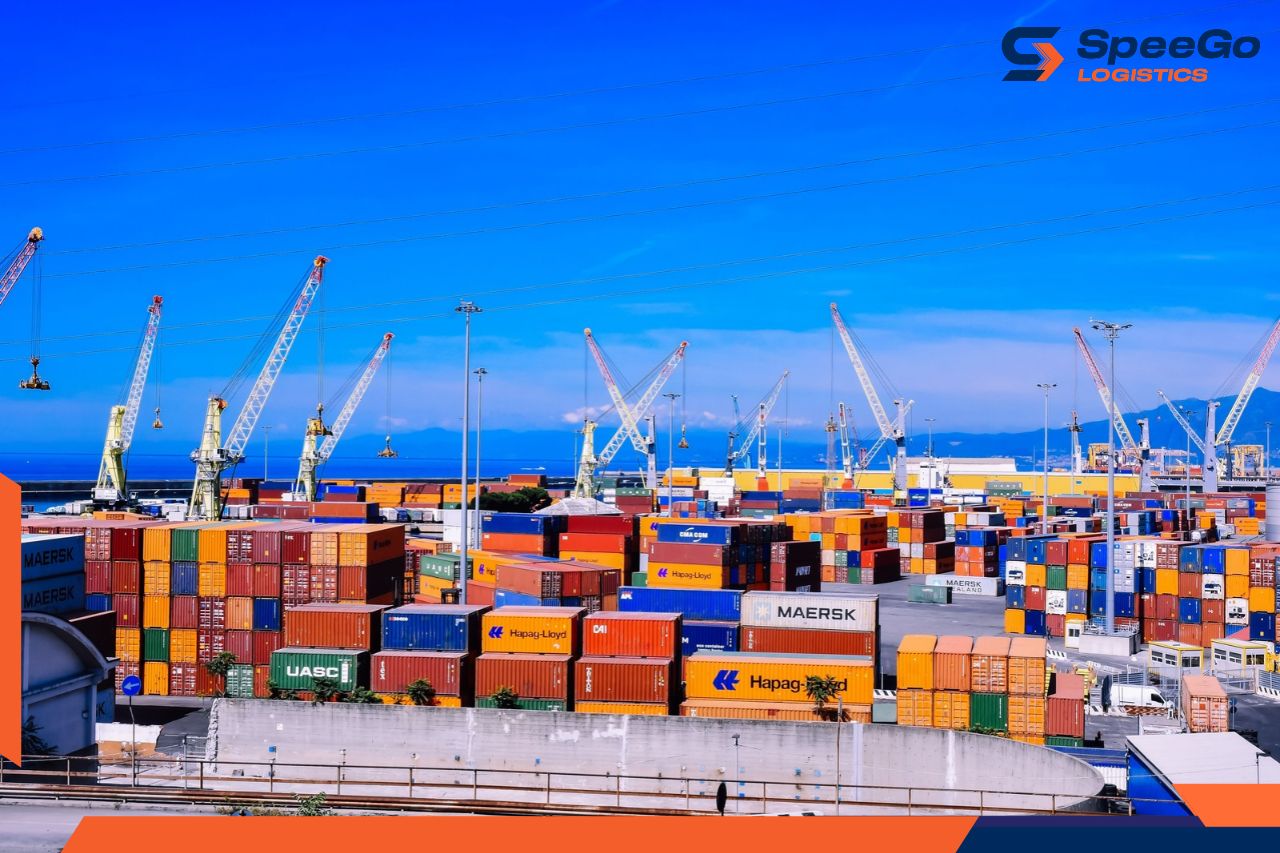
What are the key terms related to customs clearance, duties, and taxes?
Customs Clearance: The process of completing the required customs formalities for goods in accordance with applicable regulations.
Customs Broker: A licensed or authorized intermediary that assists with customs procedures within the scope of its permitted activities.
Harmonized System Code (HS Code): A code used to classify goods under the Harmonized Commodity Description and Coding System.
Import Duty: A duty imposed on imported goods in accordance with applicable regulations.
Export Duty: A duty imposed on exported goods that are subject to export taxation.
Value Added Tax (VAT): A tax imposed on the value added to goods and services at the relevant stages of the supply chain, as defined by applicable tax rules.
Customs Value: The value of goods determined for customs purposes in accordance with the applicable valuation rules.
Customs Inspection: The examination of goods, documents, or other relevant information by customs authorities.
Customs Channel: The clearance channel assigned to a customs declaration under a country’s customs risk-management and processing system.
Import License: An authorization required to import goods that are subject to import licensing requirements.
Export License: An authorization required to export goods that are subject to export licensing requirements.
Preferential Tariff: A reduced or preferential tariff rate available under an applicable trade arrangement or agreement, subject to its conditions.
Rules of Origin (ROO): Rules used to determine the country of origin of goods.
Free Trade Agreement (FTA): An agreement between participating parties to reduce or eliminate trade barriers under specified conditions.
Prohibited Goods: Goods whose import, export, or other relevant activities are prohibited under applicable regulations.
Restricted Goods: Goods subject to specific restrictions, licensing requirements, or other regulatory conditions.
7/ Shipping Costs and Logistics Surcharges Terms
Freight charges do not always represent the total cost of delivering goods to the buyer.
In addition to the main freight charges, businesses may also need to pay various additional costs, including port charges, documentation fees, handling fees, and other surcharges.

What are the key terms related to shipping costs and surcharges?
Below are some key logistics terms related to shipping costs and surcharges that businesses should understand:
Freight Rate: The quoted transportation rate for a specific route or service.
Ocean Freight: The freight charge for transporting goods by sea.
Air Freight Rate: The freight rate for transporting goods by air.
Local Charges: Fees incurred at a port or other relevant location, as specified in the applicable tariff or service agreement.
Terminal Handling Charge (THC): A charge for handling cargo or containers at a port terminal, in accordance with the applicable tariff.
Documentation Fee: A fee for processing or issuing shipping documents.
Handling Fee: A fee for handling cargo or performing related operational tasks.
Customs Clearance Fee: A service fee for assisting with customs clearance procedures.
Trucking Fee: A charge for transporting goods by truck.
Fuel Surcharge: An additional charge intended to account for fluctuations in fuel costs.
Bunker Adjustment Factor (BAF): A surcharge used in ocean freight to account for changes in marine fuel costs.
Currency Adjustment Factor (CAF): A surcharge used in some freight tariffs to account for exchange rate fluctuations.
Demurrage: A charge incurred when a container remains at a port or terminal beyond the applicable free time.
Detention: A charge incurred when a container is kept outside the port or terminal beyond the applicable free time.
Storage Fee: A charge for storing cargo or containers in a warehouse, port, or terminal.
Free Time: The period during which a specified activity or charge is exempt from fees, subject to the applicable terms and conditions.
8/ Warehousing, Packaging, Cargo Risks, and Insurance Terms
In addition to transportation, logistics also involves warehousing, inventory management, packaging, and risk control.

What are the key terms related to warehousing and inventory management?
The following are key terms and concepts related to these areas:
Warehouse: A facility used to store and manage goods.
Warehousing: The activities involved in storing, organizing, and managing goods within a warehouse.
Fulfillment: The process of handling customer orders, from order placement through processing, packing, and delivery, including returns where applicable.
Inventory: The stock of goods held by a business.
Inventory Management: The process of monitoring and managing inventory quantities, locations, and conditions.
Stock Keeping Unit (SKU): An identifier assigned to a specific product or product variant in an inventory management system.
Pallet: A platform used to support goods during storage, handling, and transportation.
Packaging: The materials used to protect and contain goods, as well as the process of packing goods for storage or transportation.
Palletization: The process of arranging and securing goods on pallets for storage, handling, or transportation.
Cargo Securing: The process of fastening and securing cargo to minimize movement during transportation.
Fragile Cargo: Goods that are easily damaged or broken and require appropriate handling and packaging.
Dangerous Goods: Goods classified as hazardous and subject to applicable regulatory requirements.
Perishable Goods: Goods that can deteriorate or spoil over time, such as certain fresh food products.
Cargo Insurance: Insurance coverage for goods during transportation, subject to the terms and conditions of the insurance policy.
General Average: A maritime principle under which parties involved in a sea voyage may share certain extraordinary sacrifices or expenses made intentionally and reasonably to preserve the vessel, cargo, and other property from a common peril, subject to applicable rules.
Cargo Damage: Physical damage to goods during storage, handling, or transportation.
Cargo Loss: The loss or disappearance of goods, whether in whole or in part.
Force Majeure: An event or circumstance that may excuse or affect a party’s contractual obligations under the applicable contract and law.
Claim: A request for compensation or a complaint relating to loss, damage, or another issue, depending on the context.
Liability: Legal or contractual responsibility for an act, omission, loss, or damage.
Risk Management: The process of identifying, assessing, and controlling potential risks.
How Should Beginners Learn and Use Logistics Terminology?
If you are new to logistics or your business is just starting to explore import-export operations, you may find it difficult to memorize and fully understand all 100+ logistics terms at once.
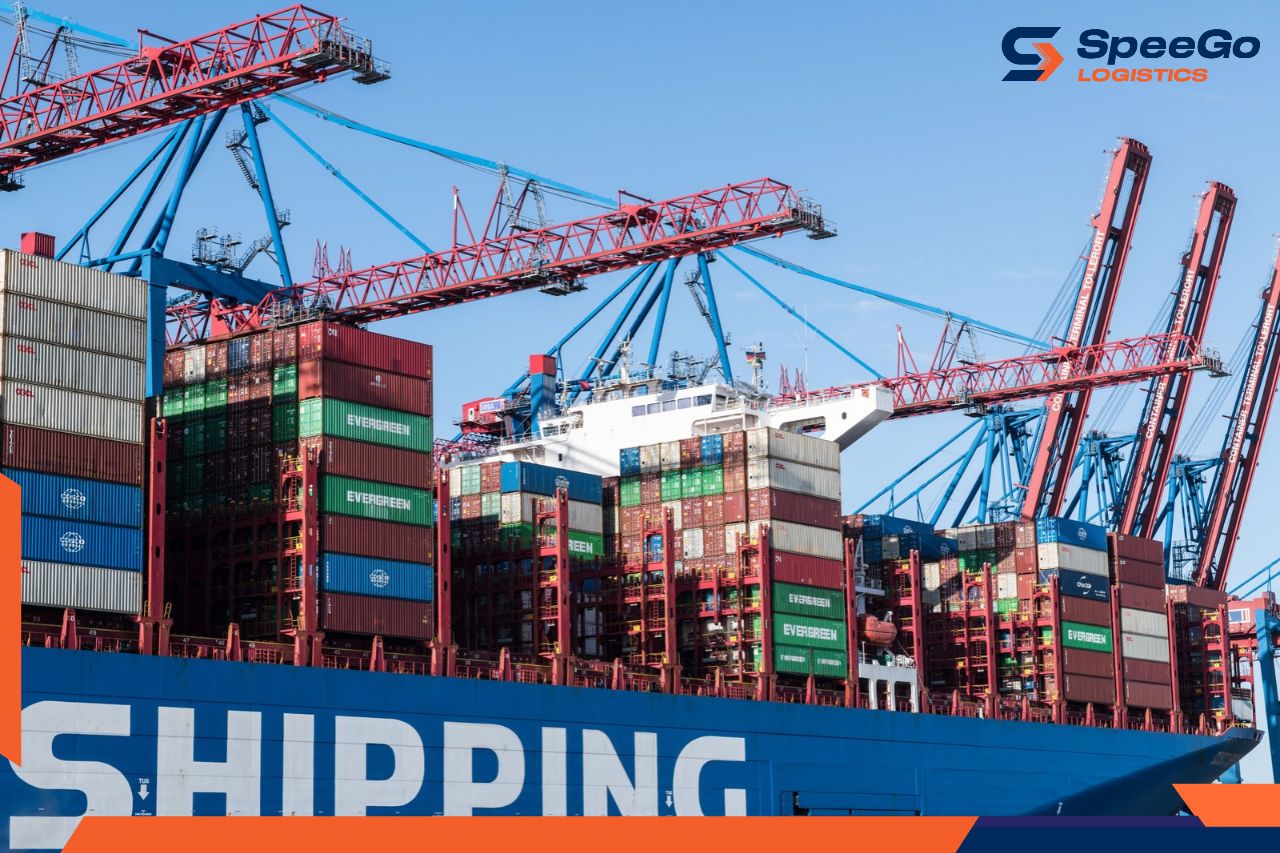
How should beginners and new businesses learn logistics and import-export terminology?
To make the learning process easier, SpeeGo Logistics recommends learning key terms in the order they appear throughout a typical shipment process:
- Finding suppliers and obtaining quotations: Familiarize yourself with Supplier, Shipper, Freight Forwarder, Freight Rate, and Incoterms.
- Booking and arranging transportation: Learn about Booking Confirmation, FCL, LCL, ETD, ETA, Transit Time, and Freight Rate.
- Preparing shipping documents: Understand Commercial Invoice, Packing List, B/L, C/O, and Customs Declaration.
- Clearing customs and receiving goods: Learn about HS Code, Customs Clearance, Import Duty, D/O, and Local Charges.
- Tracking shipments and handling unexpected issues: Understand Demurrage, Detention, Cargo Insurance, Claim, and Liability.
Mastering shipping & logistics terminology is an important first step toward understanding how goods are transported, stored, and handled throughout the international supply chain.
From basic concepts such as Shipper and Consignee to specialized terms such as FCL, VGM, HS Code, and Demurrage, each term helps you better understand a different part of the process.
You can bookmark this article as a quick reference and explore more in-depth guides on international shipping methods, Incoterms, and import-export documentation in SpeeGo’s Shipping Guides.
