
What Is Ocean Freight? A Basic Guide to the Sea Freight Shipping Process
Ocean freight is a method of transporting goods by sea using cargo ships between domestic or international ports.
It is particularly suitable for businesses shipping large volumes of cargo, oversized goods, or shipments that do not require urgent delivery.
However, choosing ocean freight depends on several factors, including cargo type, shipment volume, route, FCL or LCL requirements, and transit time—not just cost.
Sea freight plays a vital role in logistics.
So, when should businesses choose ocean freight? What types of cargo are suitable for sea shipping? How does the process work, and what risks may arise during transportation?
Let’s explore these questions in detail with SpeeGo Logistics.
Related Reading: 6 Main Transportation Modes in Logistics
What Is Ocean Freight?
Ocean Freight, also known as Sea Freight, is a method of transporting goods by cargo ship between ports. It is commonly used for international shipments involving large cargo volumes or when businesses want to optimize logistics costs.
According to UNCTAD, more than 80% of the volume of international trade in goods is transported by sea. This highlights the importance of ocean shipping as a fundamental mode of transportation in global supply chains.
If your business imports goods from China or other major sourcing markets, ocean freight may be a suitable option when cost efficiency is more important than speed.
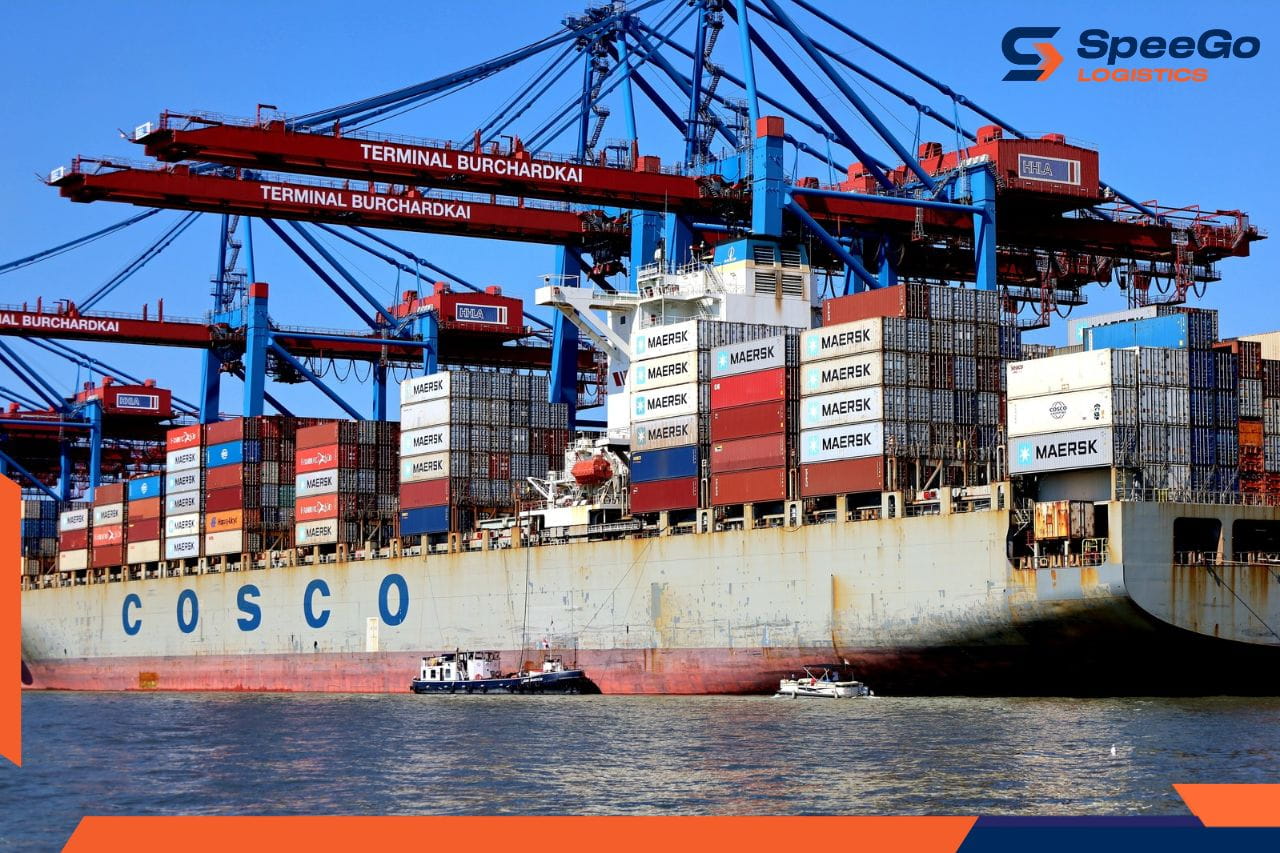
Ocean freight accounts for up to 80% of total cargo transportation.
When Should Businesses Choose Ocean Freight?
Businesses should consider ocean freight in the following situations:
- The shipment has a large weight or volume.
- Delivery is not required within a short timeframe.
- The shipping route has reliable sailing schedules.
- The business wants to reduce logistics costs.
- The cargo can be shipped in a full container or consolidated with other shipments.
- Certain goods cannot be transported by air.
Example:
A business needs to ship 20 tons of cargo from China to Australia.
In this case, air freight would be difficult to cost-optimize. Ocean freight would therefore be a more practical option in terms of cost and overall feasibility.
What Types of Cargo Are Suitable for Ocean Freight?
Ocean freight can accommodate a wide range of cargo, from consumer goods and equipment to oversized machinery and even certain types of cargo that cannot be transported by air.
Some of the most commonly shipped cargo categories include:
| Cargo Type | Examples |
|---|---|
| Consumer Goods | Shoes, clothing, household goods |
| Furniture | Tables, chairs, cabinets, beds, home decor |
| Machinery | Industrial equipment, electronic components |
| Beauty Products | Nail supplies, cosmetics |
| Agricultural Products | Food, agricultural commodities |
| Specialized Cargo | Refrigerated goods, liquids, chemicals, oversized cargo, etc. |
However, not all cargo can be shipped by sea under standard shipping conditions.
For example: Dangerous goods, temperature-controlled cargo, and oversized shipments may require specialized containers and handling procedures.
What Are the Main Types of Ocean Freight Shipping?
The two most common types of ocean freight shipping are FCL and LCL:
- FCL (Full Container Load): The shipment occupies a full container, or the shipper books an entire container exclusively for their cargo.
- LCL (Less than Container Load): The shipment is smaller and consolidated with cargo from other shippers to fill a container.
Businesses can also use specialized container types depending on the characteristics and requirements of their cargo.
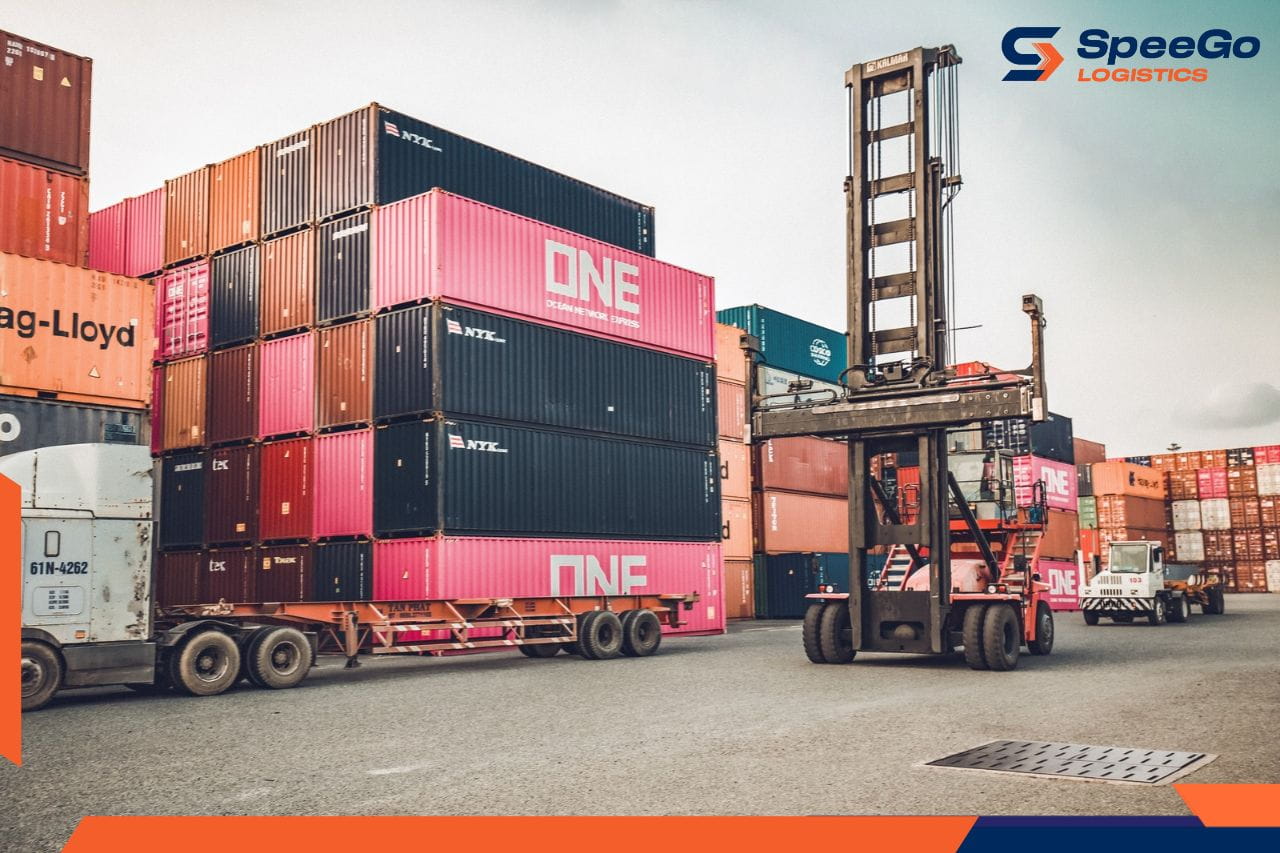
FCL is ideal for large shipments, while LCL is suitable for smaller shipments.
Example:
A customer needs to ship a container of frozen food from Vietnam to the U.S. This type of cargo requires temperature control throughout the journey, so a reefer container is needed.
Understanding and choosing the right shipping option can help businesses reduce costs, handling time, and cargo-related risks.
Why Should Businesses Ship Goods by Sea?
The biggest advantage of ocean freight is its ability to transport large volumes of cargo at relatively low costs, while connecting major commercial hubs around the world.
Cost Efficiency
When delivery time is not a strict requirement, ocean freight is often one of the first options businesses consider to reduce transportation costs for large shipments.
For containerized cargo, transportation costs can be spread across a large volume of goods, helping reduce logistics costs per unit.
However, this does not mean ocean freight is only suitable for low-value goods.
According to UNCTAD, in addition to accounting for more than 80% of global trade by volume, maritime transport also accounts for approximately 70% of international trade by value.
Ocean Freight Is Ideal for Large Shipments
Cargo with exceptionally large volumes or weights is often difficult or uneconomical to transport using faster modes such as air freight.
This is why ocean freight is commonly used to transport raw materials, consumer goods, machinery, furniture, and manufacturing supplies.
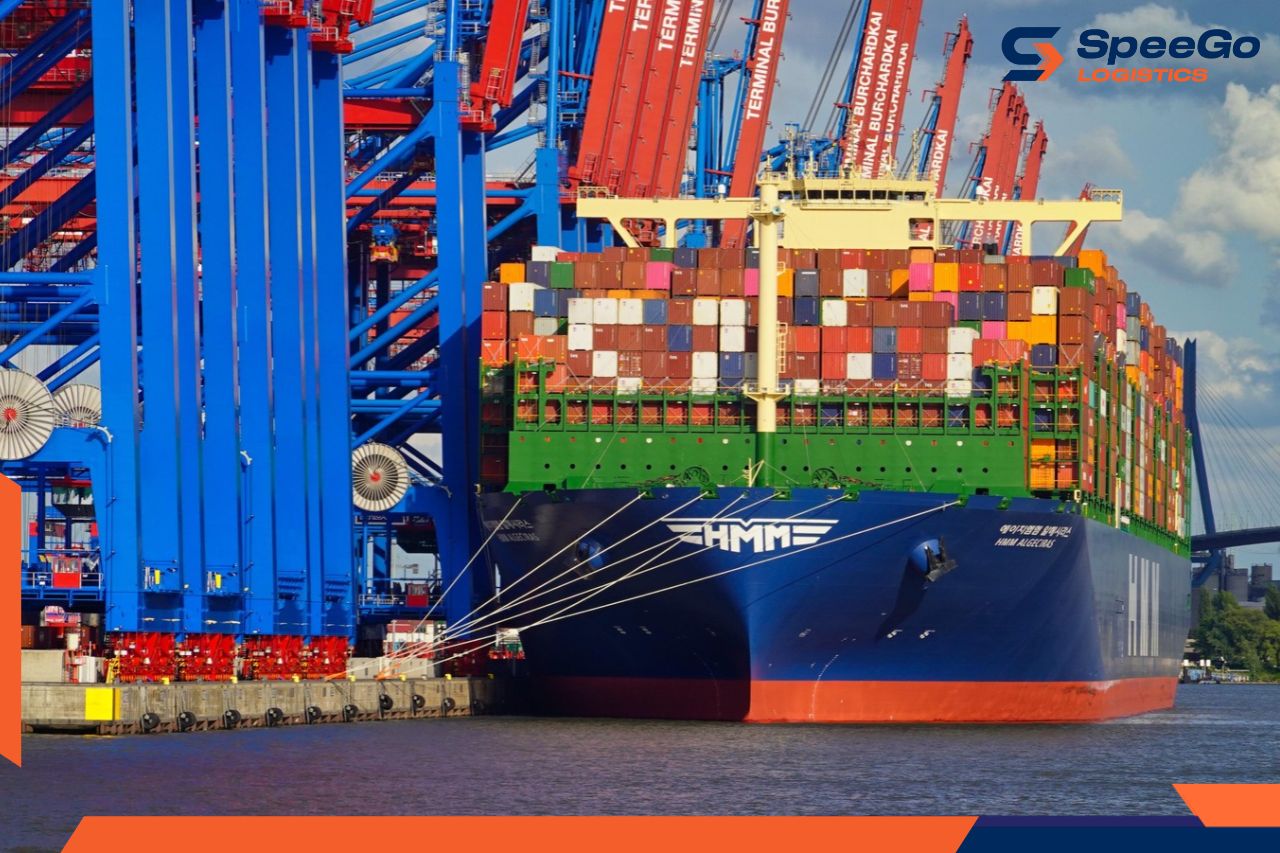
Sea freight is a suitable option for heavy shipments
Global Shipping Network
Ocean shipping routes connect major manufacturing and consumption hubs across Asia, North America, Europe, Australia, and many other regions.
This allows businesses to establish consistent import and export routes instead of arranging transportation for each shipment independently.
A Wide Range of Cargo Types
From standard dry containers to reefer containers, flat racks, and tank containers, ocean freight offers a variety of shipping solutions to accommodate different cargo requirements.
Therefore, the question is not simply “Should I ship by sea?” but also “Which container type and shipping solution are best suited for my cargo?”
The International Ocean Freight Shipping Process
An international ocean freight shipment typically goes through seven main stages: shipment inquiry, quotation and booking, cargo loading, export customs clearance, international transportation, import customs clearance, and final delivery.
Let’s take a closer look at what freight forwarders and logistics providers handle at each stage.
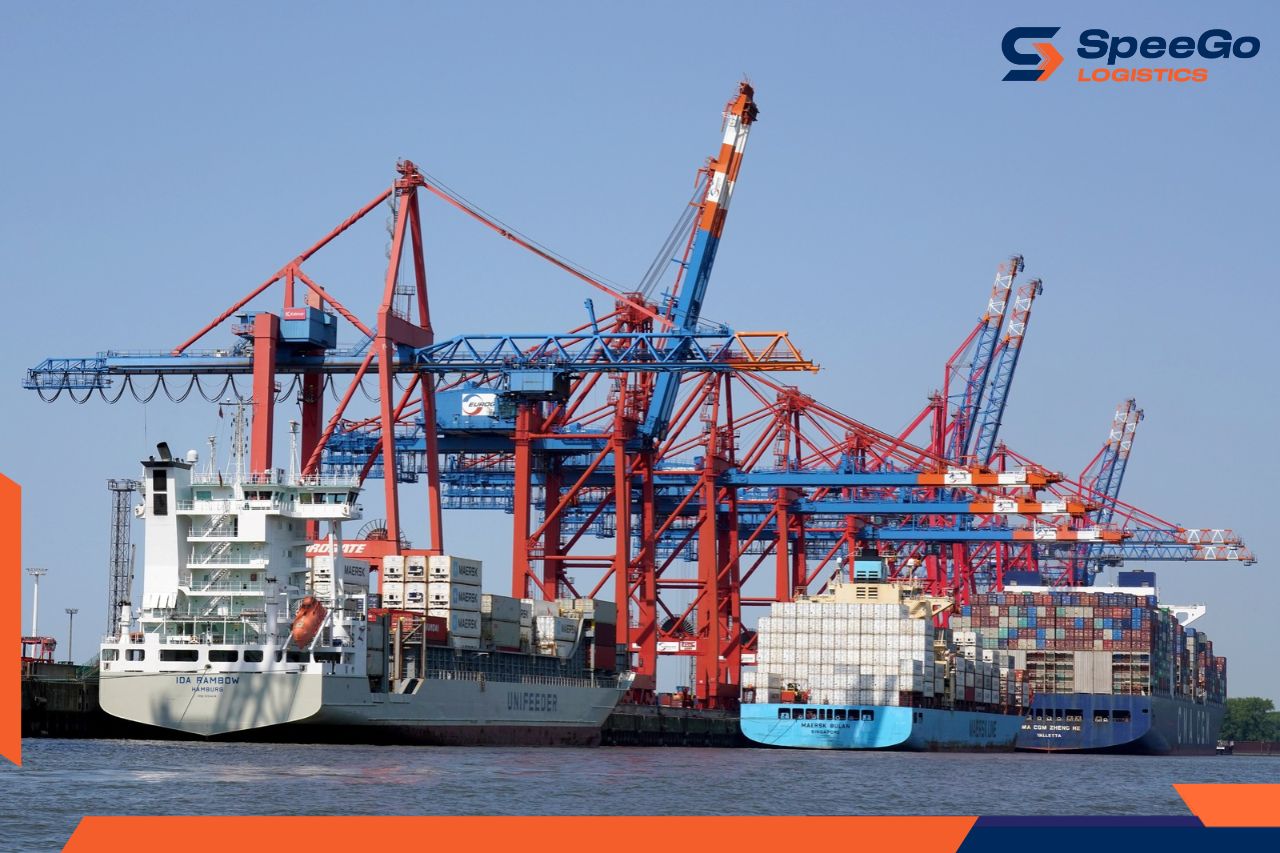
How does the international ocean freight shipping process work?
Step 1. Shipment Inquiry
The business needs to provide information about the cargo type, quantity, weight, dimensions, pickup location, origin port, destination port, and shipping terms.
The logistics provider collects this information to determine the most suitable shipping arrangement.
Step 2. Quotation and Booking
The freight forwarder checks the shipping route, sailing schedule, container type, and applicable charges before providing a quotation.
Once the business approves the quote, the provider proceeds with booking space with the shipping line and arranging any necessary inland transportation.
Step 3. Cargo Loading
The cargo is loaded into an appropriate container at a warehouse or designated location.
This is an important stage in the ocean freight shipping process because weight distribution, cushioning, cargo securing, and loading methods can significantly affect cargo safety and shipping costs.
Step 4. Export Customs Clearance
Before the cargo can leave the origin country, export customs clearance must be completed.
Depending on the cargo type and shipping route, the required documents may include a commercial invoice, packing list, bill of lading, and other relevant regulatory or specialized documents.
Logistics providers such as logistics companies or freight forwarders can assist with export customs clearance. However, businesses are still responsible for providing the necessary cargo information and supporting documents.
Step 5. International Transportation
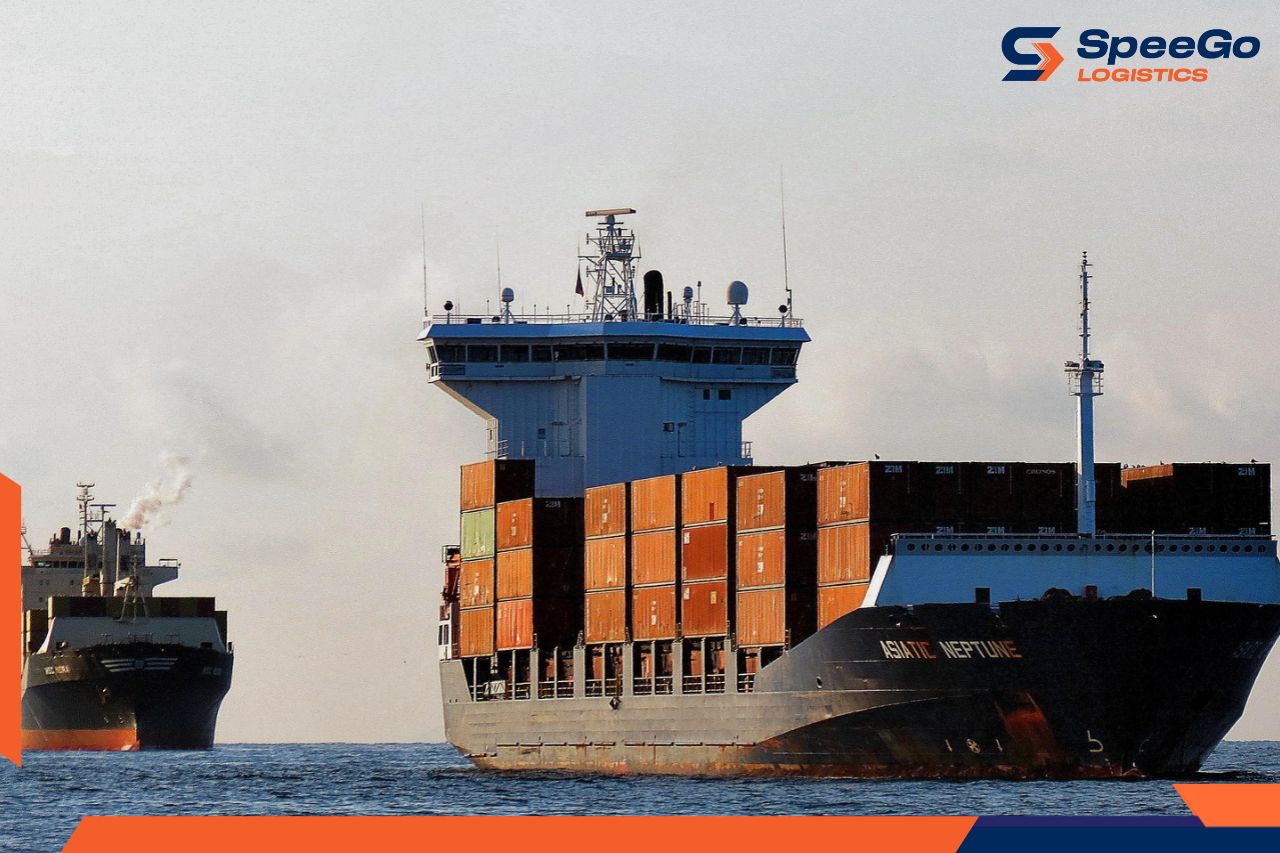
After export customs clearance, the goods are transported to the destination country.
The freight forwarder or logistics provider coordinates the container’s movement to the port and arranges for it to be loaded onto the vessel. The cargo is then transported to the destination port according to the booked sailing schedule.
There is an important consideration businesses should keep in mind:
Actual ocean transit times may vary due to sailing schedules, weather conditions, port congestion, or other operational factors.
Step 6. Import Customs Clearance
At the destination, the importer completes customs declarations and fulfills applicable duties, taxes, and any specialized inspection requirements.
Import customs procedures and tax obligations may vary depending on the cargo type and destination country.
Step 7. Final Delivery
Once customs clearance and port procedures are completed, the container or LCL cargo is transported to the receiving warehouse, factory, or delivery address.
For businesses, this is an important point to remember: Ocean Freight rates do not necessarily represent the total cost of delivering cargo to your warehouse.
Related Articles
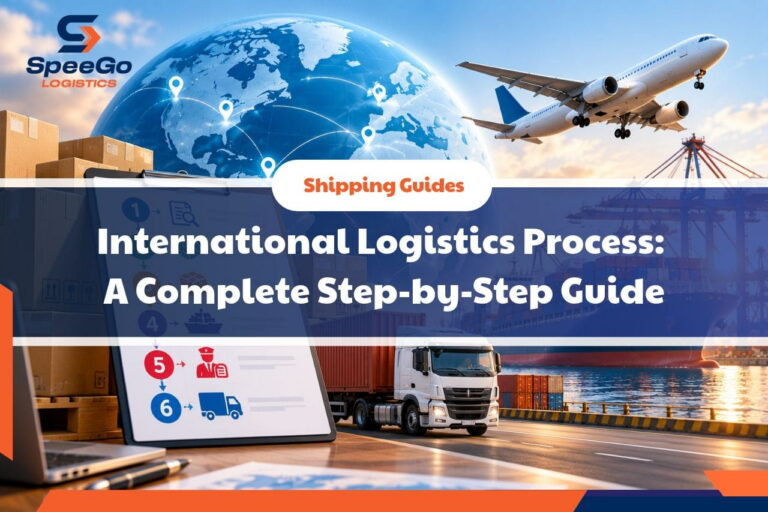

International Ocean Freight Shipping Costs
International ocean freight rates are not fixed and do not apply universally to every shipment.
Shipping costs depend on several factors, including the shipping route, container type, shipping date, cargo volume, and charges at ports and pickup or delivery locations.
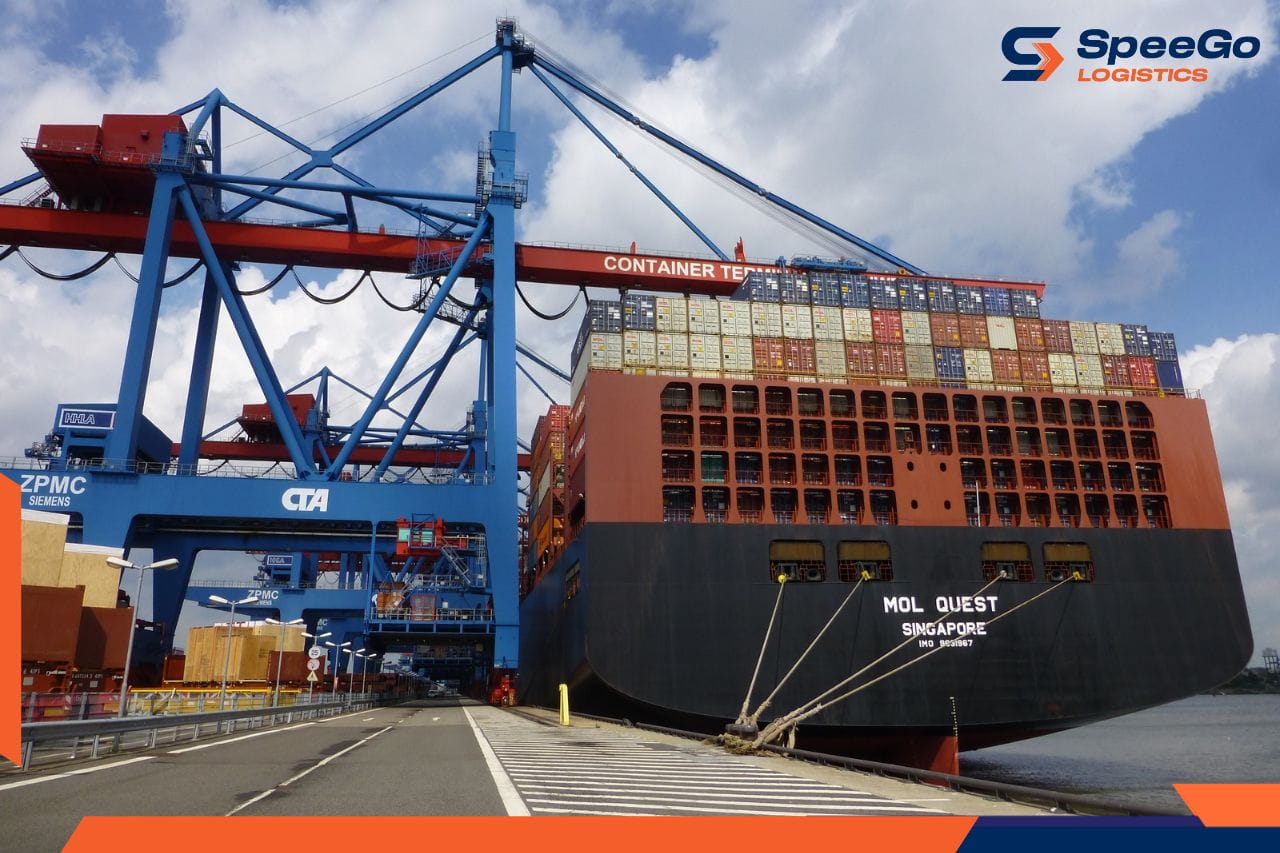
Ocean freight costs depend on various factors
The following are some of the common cost components included in an international ocean freight quotation:
- Ocean Freight: The main charge for transporting cargo by sea.
- Origin Charges: Charges incurred at the origin port or in the exporting country.
- Destination Charges: Charges incurred at the destination port or in the importing country.
- Customs: Costs related to customs procedures.
- Trucking: Inland transportation costs.
- Documentation: Shipping documentation fees.
- Surcharges: Additional fees depending on the route or shipping period.
Therefore, when requesting international ocean freight container rates, businesses should ask for quotations based on the same shipping terms and service scope to ensure an accurate comparison.
Example:
You use international ocean freight services from Company A and receive an Ocean Freight quotation. This may represent only one portion of the total transportation cost your business will have to pay.
A tip from SpeeGo Logistics:
If you want to understand your actual logistics budget, request a quotation covering the total cost from pickup to final delivery rather than just the ocean freight charge.
How Long Does International Ocean Freight Shipping Take?
International ocean freight transit times depend on the specific route and shipping conditions. There is no single transit time that applies to every shipment.
In addition to vessel transit time, businesses should account for other stages, such as pickup, cargo loading, customs clearance, port handling, and final-mile delivery.
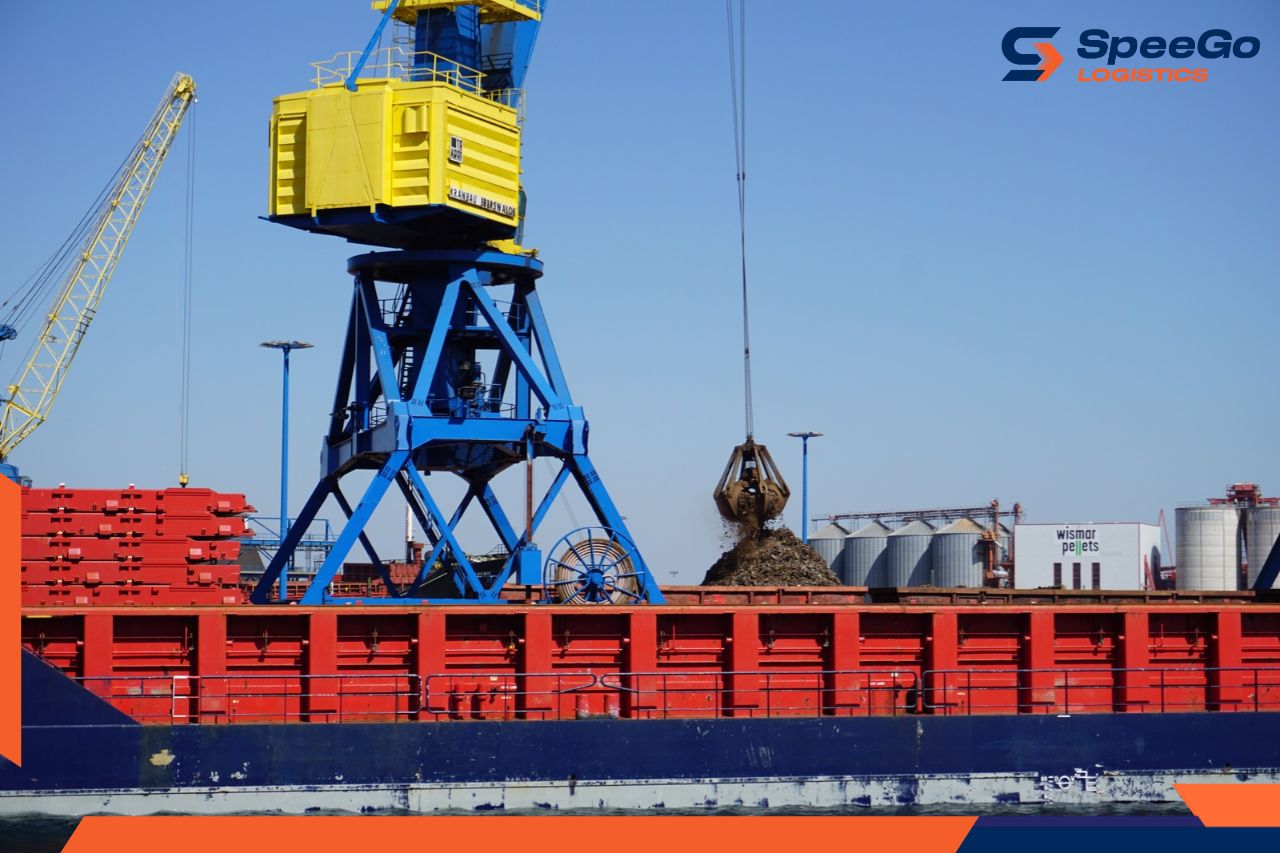
The quoted transit time is often inaccurate compared to the actual shipping time.
Therefore, when planning imports, businesses should understand the following terms to avoid disrupting their overall supply chain:
- Transit Time: The time it takes for cargo to travel between ports.
- Port Handling Time: The time required for cargo handling and processing at ports.
- Customs Clearance: The time required to complete customs procedures.
- Last-Mile Delivery: The time required to transport cargo from the port to the receiving warehouse.
This is why a professional logistics provider should provide an estimated time of arrival (ETA) and shipment status updates rather than simply giving an initial transit time estimate.
Related Reading: 100+ Logistics Terms Businesses Should Know
Frequently Asked Questions About Ocean Freight Shipping
Can All Types of Cargo Be Shipped by Sea?
Not all types of cargo can be shipped via Ocean Freight under standard shipping conditions.
In addition to common cargo types such as furniture, apparel, nail products, and food, there are also goods that require special handling, as well as dangerous goods and restricted cargo.
These goods may be subject to stricter import and export procedures or may even be prohibited from being exported or imported.
Keep in mind: A product permitted for export from the origin country is not necessarily permitted for import into the destination country. Businesses should check the regulations of both countries before booking a shipment.
Is Sea Freight or Air Freight Faster and Cheaper?
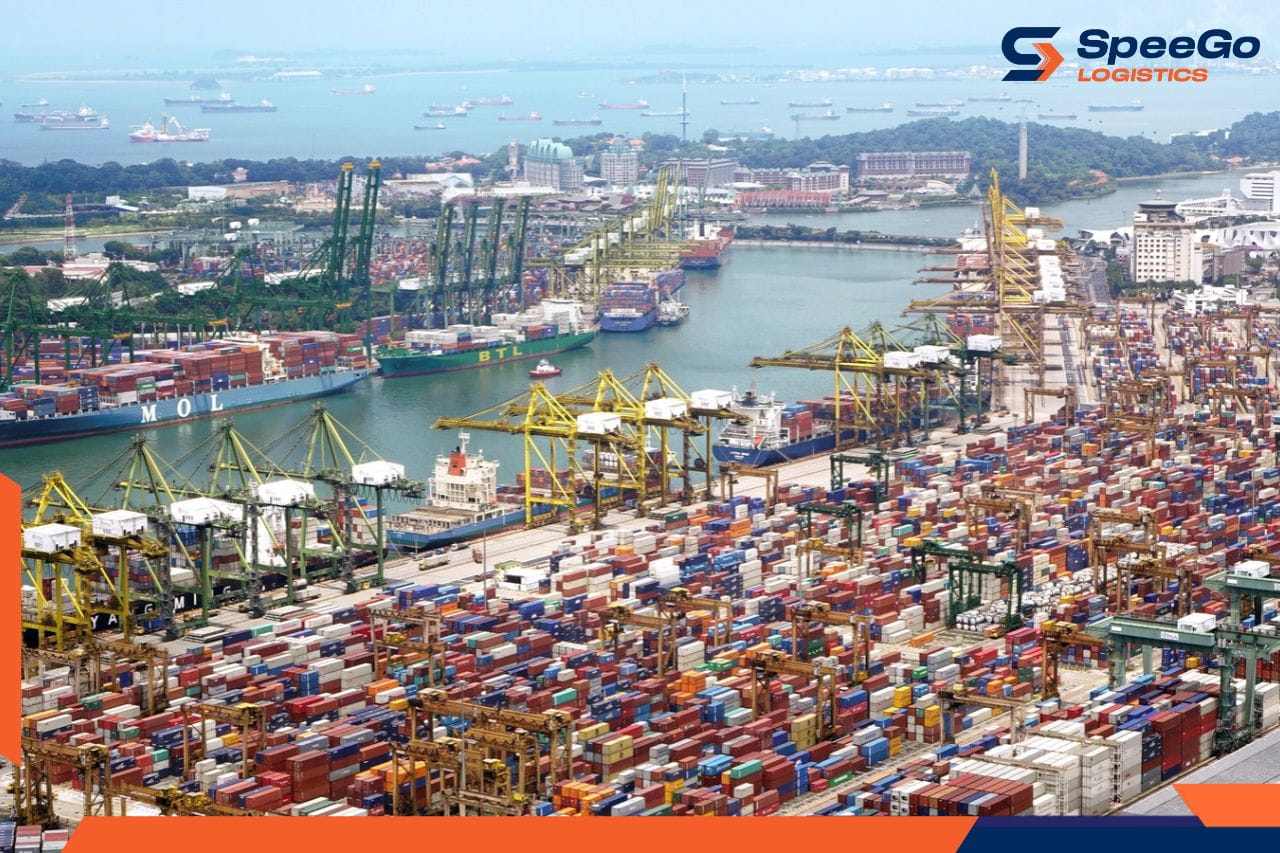
Should you choose ocean freight or air freight?
Under comparable conditions, cargo types, and destinations, Sea Freight (ocean freight) is generally cheaper, while Air Freight is significantly faster.
Does SpeeGo Logistics Provide International Ocean Freight Services?
Yes. SpeeGo Logistics arranges ocean freight shipments from Vietnam and China to the U.S., Canada, and Australia through both FCL and LCL shipping options.
We also help businesses plan shipping solutions, handle import and export procedures and documentation, and support companies that are just starting to build their international supply chains.
Conclusion
Ocean freight is a suitable option for businesses shipping large volumes of cargo internationally, handling a wide range of goods, and prioritizing cost efficiency over speed.
However, choosing an effective shipping solution requires considering FCL/LCL, container types, shipping routes, transit times, customs procedures, and total door-to-door costs.
If you are preparing to ship goods internationally by sea, start by identifying your cargo type, shipment volume, origin and destination, and required delivery timeframe.
Follow SpeeGo Logistics for the latest updates on ocean freight, logistics, and global supply chains.
