Sourcing & Quality control services at SpeeGo
Sourcing and quality control are the two steps that determine your cost of goods sold, product quality, and supply stability. The sections below explain key terms, how to choose the right supplier, and the OEM, ODM, and private label models. You will also see the step-by-step supplier sourcing process, QC standards for five product categories, and SpeeGo’s end-to-end sourcing and quality control services.
Understanding sourcing and quality control terms
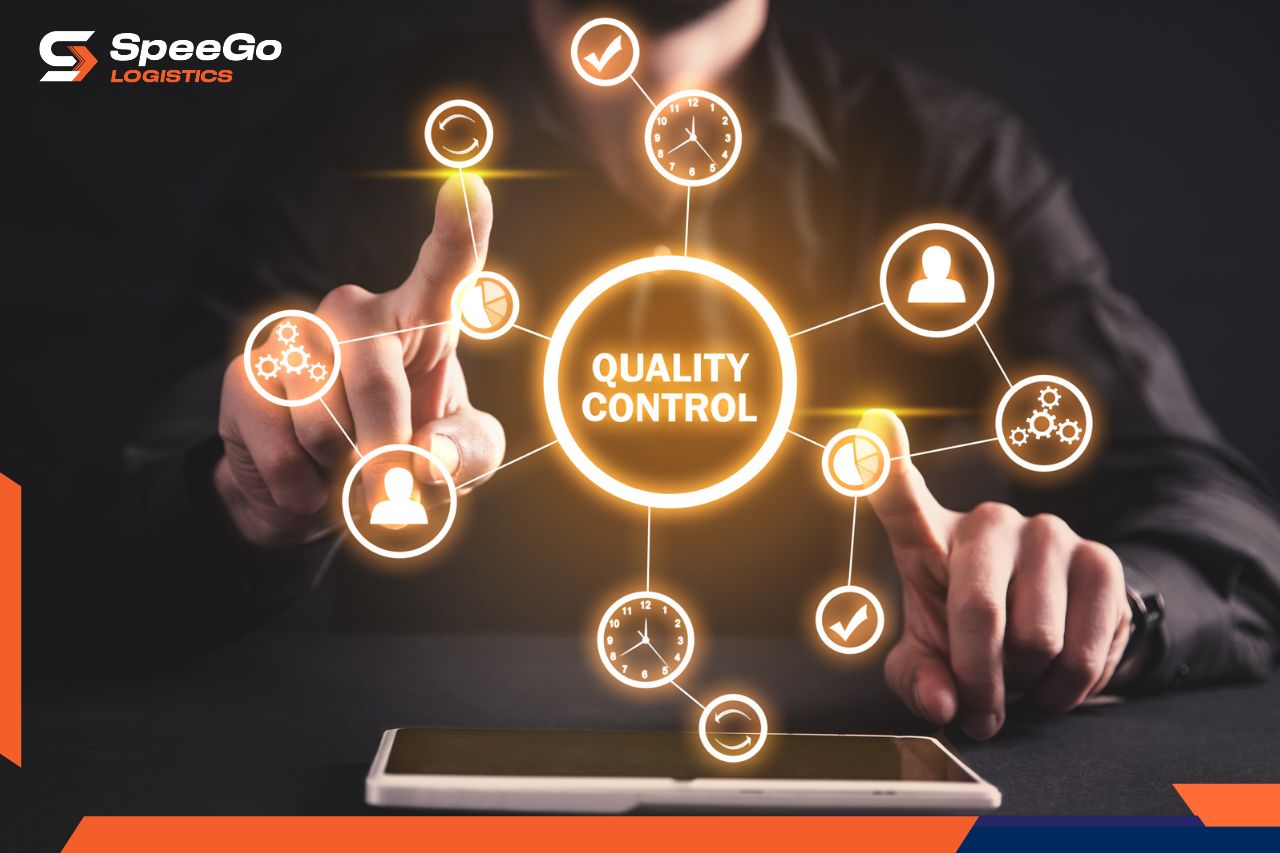
Why businesses choose end-to-end supply chain management
In the supply chain, sourcing and quality control (QC) go hand in hand. Sourcing helps you choose a reliable supplier, and QC confirms the product meets specifications before it leaves the factory.
A combined sourcing & QC service gives you a single point of contact who is accountable end to end. That reduces the risk of defective goods and the cost of returns.
Below, we break down each concept and show how SpeeGo brings them together.
What is sourcing?
Sourcing is the process of identifying, evaluating, and selecting the right suppliers. The goal is a stable supply of goods that meet quality standards, with reasonable cost and lead times. It is the first stage of the supply chain and directly affects a seller’s cost of goods sold (COGS).
You can source domestically or internationally. Domestic suppliers offer faster delivery and easier inspection, but prices are usually higher. Suppliers in China and Vietnam offer competitive pricing and a wide range of product styles.
What is quality control (QC)?
Quality control (QC) is the inspection of products against standards agreed with the manufacturer. QC typically uses AQL sampling. AQL (Acceptable Quality Limit) is the maximum defect level considered acceptable, as defined in ISO 2859-1 (Source: Epic Sourcing).
What does SpeeGo’s sourcing & QC service include?
SpeeGo Logistics’ QC inspection & sourcing services are divided into the categories below. You can use the full package or select individual services.
| Service | Scope of work | What you get |
| Manufacturer sourcing | Screen and connect you with factories in China and Vietnam | A shortlist of suitable suppliers |
| Supplier verification | Check business licenses, certifications, and production capacity | Factory assessment reports |
| Sample inspection | Compare samples against your technical requirements | Feedback with sample photos |
| In-production and final QC | AQL sampling and packaging inspection | QC reports with photos and video |
| Container loading inspection | Supervise the loading process | Confirmation of quantity and condition of goods |
| Shipping | Ocean freight and air freight to the U.S., Canada, and Australia | Door-to-door delivery |
How do you choose the right supplier for your needs?
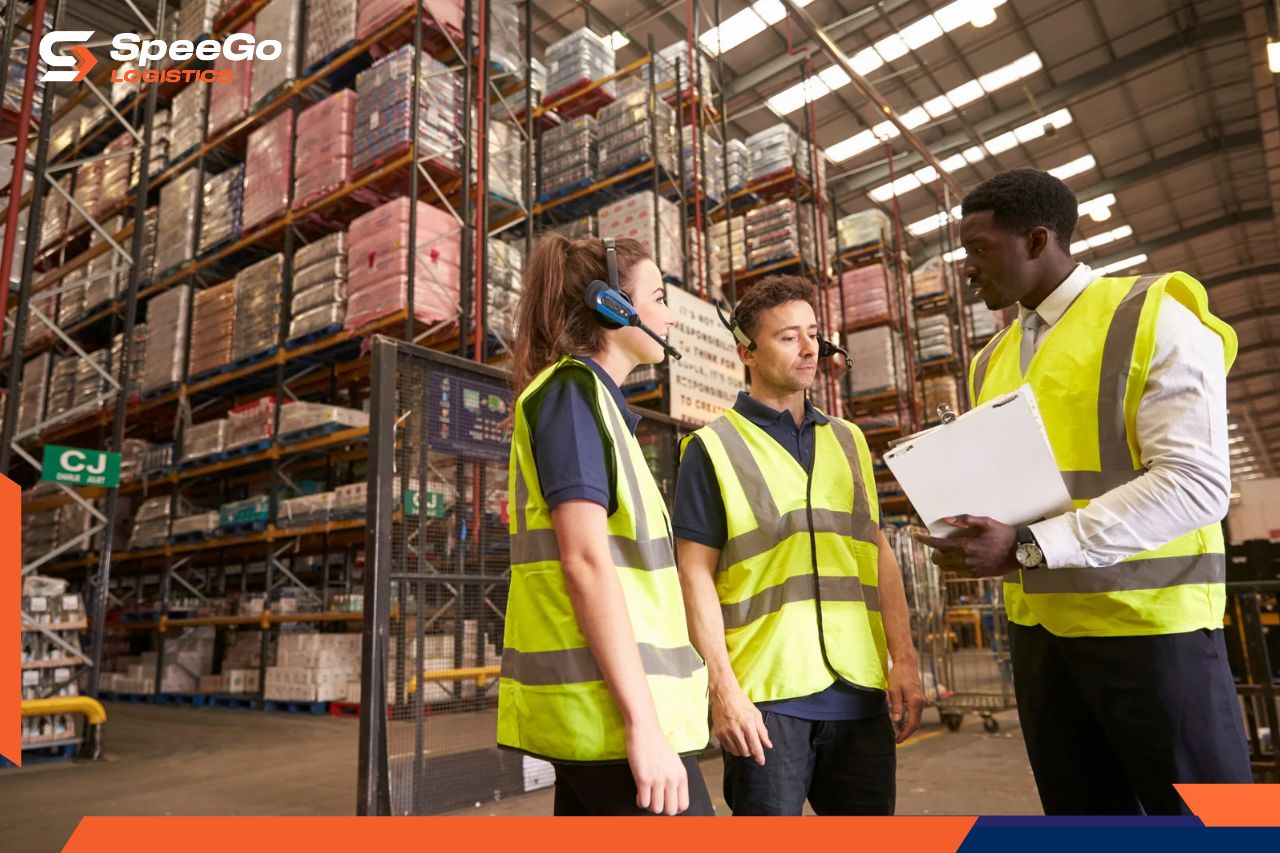
How to select and evaluate the best supplier for your business
The supplier sourcing process comes down to three steps:
- Define the supplier type: Choose a supplier that fits the scale of your business;
- Select a sourcing channel: Prioritize reliable platforms and information sources;
- Evaluate thoroughly: Use clear criteria to compare suppliers, and do not decide on the lowest price alone. Balance quality, cost, and delivery time.
To start, let’s look at which type of supplier best fits your current business size.
Which type of supplier should you choose?
Direct factories offer the lowest prices but require higher MOQs. Trading companies are more flexible but cost more. The table below shows reference ranges compiled by SpeeGo Logistics. Actual figures vary by product category.
| Supplier Type | Key Characteristics | Lowest MOQ | Price | Quality Verification | Best For |
| Direct factory | Manufactures in-house, no intermediaries | 500-2,000 units | Lowest | Controllable | Large imports, private label |
| Trading company | Consolidates goods from multiple factories | 100-500 units | 10–20% higher | Limited | Small imports, product testing |
| Sourcing agent | Finds and manages factories on your behalf | Varies by factory | Fee of 3-10% of order value | Negotiable | First-time imports, complex products |
| Wholesale distributor | Ready stock, fast domestic shipping | 1-50 units | Highest | Depends on the manufacturer | Small imports, retail |
Where do you start sourcing manufacturers?
There are three main channels: B2B marketplaces, trade shows, and sourcing agents.
- B2B marketplaces (Alibaba, Global Sources, 1688): Fast and easy for comparing prices. For small trial orders, including when sourcing dropshipping products, buying directly on Alibaba with Trade Assurance is often cheaper than hiring an agent;
- Trade shows: Meet manufacturers face to face and review samples on site;
- Sourcing agents: A good fit for custom products, orders above roughly $5,000, or projects involving several suppliers at once.
What criteria should you use to evaluate suppliers?
Evaluate suppliers using the QCD framework: Quality, Cost, and Delivery. The table below helps you rank priorities for each order.
| Criteria | Why it matters |
| Price and payment terms | Directly affect profit margin |
| Quality and certifications | Determine defect rates and customs clearance |
| Production capacity | Ensures the supplier can handle large or urgent orders |
| Delivery time | Affects speed to market |
| Reputation and financial stability | Reduces the risk of a supplier going out of business |
| Communication | Limits errors caused by language and time zone differences |
Which product categories does SpeeGo support for sourcing and quality control?
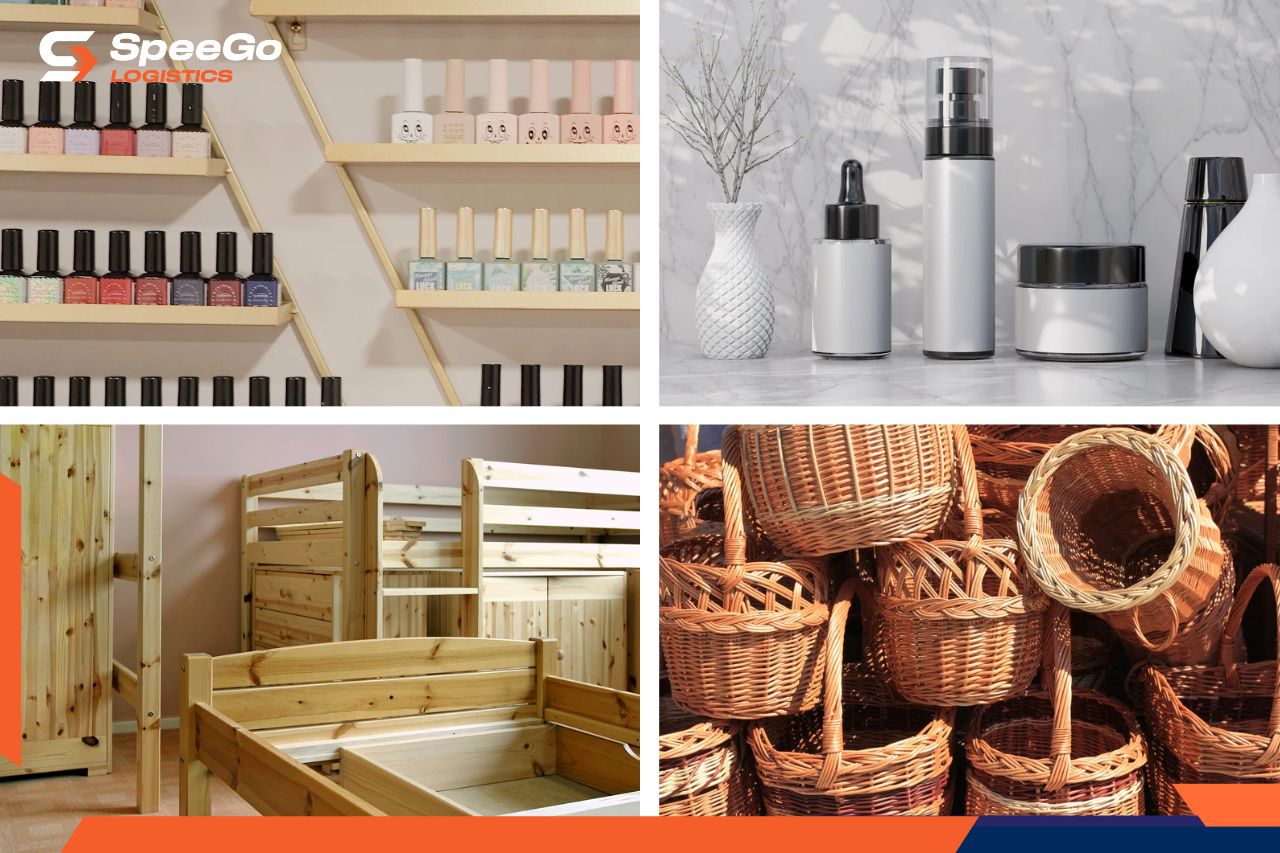
Product categories supported by SpeeGo for sourcing and QC
SpeeGo Logistics provides sourcing and quality control services for these main categories: cosmetics, nail products, home décor and furniture, handicrafts, and technical equipment.
Sourcing cosmetics
Cosmetics sold in the U.S. are regulated by the FDA under the Modernization of Cosmetics Regulation Act (MoCRA). Foreign manufacturing facilities must also register with the FDA. The responsible person must submit a list of products and ingredients (Source: DB Schenker).
During cosmetics QC, SpeeGo inspects labeling, packaging, seal integrity, and batch-to-batch consistency. We recommend choosing factories certified to GMP or ISO 22716.
Sourcing nail products
Nail products include gel polish, acrylic powder, tools, and accessories. Note that many of these items are classified as flammable. To ship them, you must provide Safety Data Sheets (SDS) and complete a dangerous goods declaration.
During QC, SpeeGo checks color accuracy, gel adhesion, bottle cap seals (to prevent leaks), tool quality, and packaging.
Sourcing home décor and furniture
Furniture is bulky and prone to damage in transit. Wood and wood products are also subject to import regulations that vary by market. During QC, SpeeGo inspects frames, joints, finishes, dimensions, and impact-resistant packaging.
Sourcing handicrafts
Handmade goods always show small differences from piece to piece. A QC inspection helps you agree on an acceptable tolerance before mass production begins.
At SpeeGo, we check color consistency, dimensions, finishing details, and, in particular, material moisture content.
Controlling moisture early helps you avoid common risks on long ocean freight transits, such as cracking, warping, and mold.
Sourcing technical equipment
Technical equipment requires functional testing, not just a visual check. Required certifications depend on the destination market.
During QC, SpeeGo goes beyond a visual check and test-operates the product. We inspect everything from voltage and plug type to each accessory and the included manual.
For devices with lithium batteries, which are classified as dangerous goods, SpeeGo makes sure packaging and shipping declarations comply with applicable safety regulations.
What are your options for bringing a product to market?
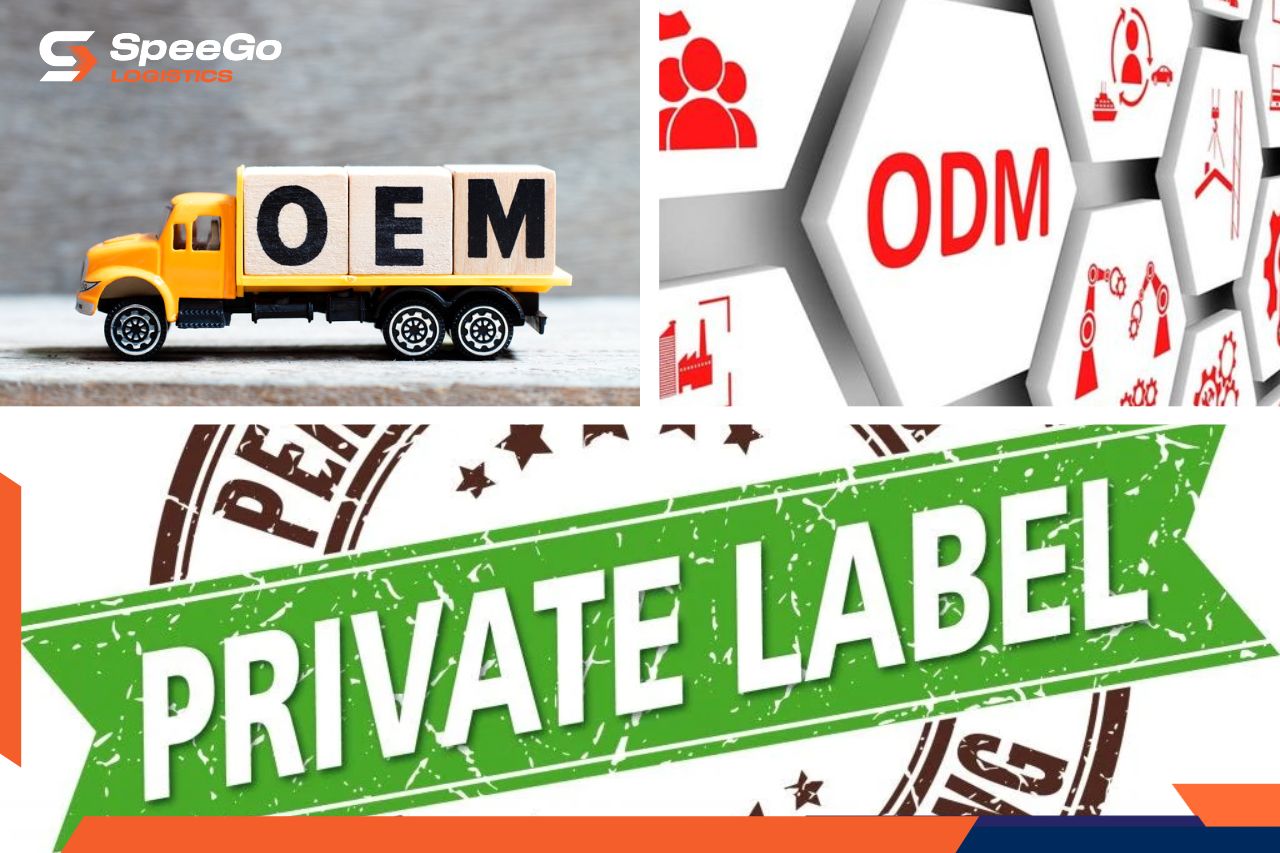
Choosing the right manufacturing model: OEM, ODM, or private label
There are three common manufacturing models: OEM, ODM, and private label. Choose your model before you look for a factory, because it determines MOQ, cost, and how much control you have.
How do OEM and ODM differ?
OEM (original equipment manufacturer) means the factory builds to your design. ODM (original design manufacturer) means the factory designs and builds the product, and you add your brand. The comparison below shows the key differences.
| Criteria | OEM | ODM |
| Who designs the product | You | The factory |
| Typical MOQ | 500 – 5,000+ units | 100 – 500 units |
| Risk | High development cost | Competitors may sell similar products |
What is Private Label?
Private label means you choose a product the factory already makes and put your own brand on it. It is a fast, low-capital approach that suits new sellers testing the market.
The trade-off is that competitors may sell the same product under a different label. To stand out, customize the packaging, accessories, or formulation.
Why partner with SpeeGo Logistics?
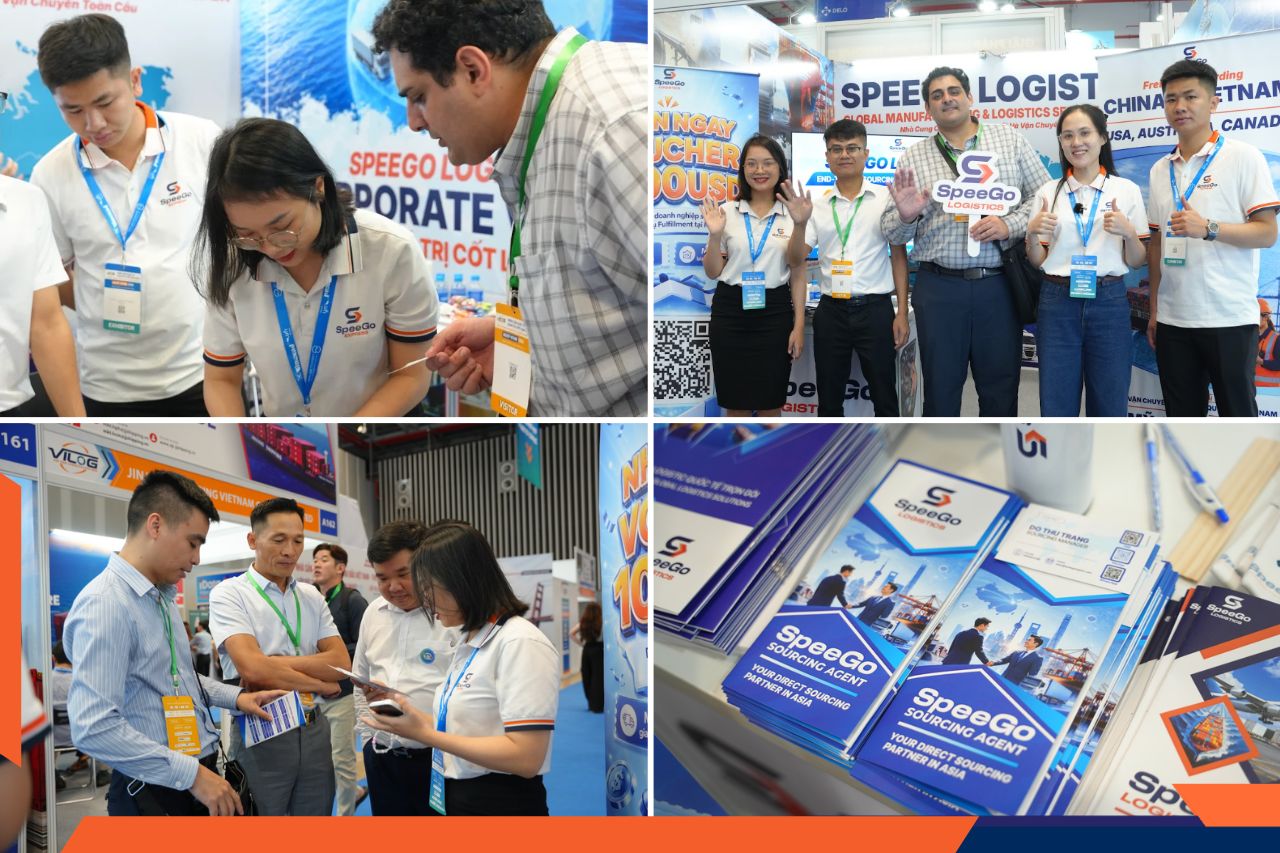
SpeeGo’s 3-in-1 solution: Sourcing, quality inspection, and shipping
SpeeGo Logistics specializes in shipping goods from China and Vietnam to the U.S., Canada, and Australia. What sets SpeeGo apart is a three-in-one solution: sourcing, quality inspection, and shipping in a single process.
Instead of managing several separate vendors, you work with one point of contact who moves your goods from the factory floor to your customer’s door.
What does SpeeGo handle in a single process?
SpeeGo acts as a direct link between you and reliable manufacturers in China and Vietnam. We inspect each shipment at the factory, then ship by ocean freight or air freight depending on your needs.
In addition, our fulfillment service helps sellers distribute products to buyers anywhere. With SpeeGo’s QC sourcing service and shipping in one place, you save time, control costs, and support revenue growth.
Why choose SpeeGo instead of working with multiple intermediaries?
When you hand sourcing to one party and QC to another, accountability gets split. If a shipment has defects, vendors tend to point fingers at each other, and your product bears the risk.
With SpeeGo, that gap disappears. We take single-point responsibility from selecting the factory to door-to-door delivery.
How transparent is SpeeGo about factory information and costs?
SpeeGo provides clear quotes and shares factory information on request. This lets you verify pricing and avoid the risk of hidden commissions.
Frequently asked questions about sourcing & quality control
1. What does SpeeGo’s sourcing and quality control service include?
SpeeGo helps you find manufacturers, verify factories, inspect samples, and run QC to AQL standards. Goods are then shipped to the U.S., Canada, or Australia. You can use the full package or choose individual services.
2. Where does SpeeGo typically source and inspect products?
SpeeGo connects you with manufacturers in China and Vietnam. After inspection, goods ship by ocean freight or air freight to the U.S., Canada, and Australia.
3. How do I get a consultation and quote from SpeeGo?
Send SpeeGo your product details, estimated quantity, and destination market. SpeeGo will provide a free consultation and a detailed quote.
SpeeGo Logistics is a freight forwarder specializing in the China/Vietnam to U.S., Canada, and Australia trade lanes. We offer a turnkey solution for Vietnamese sellers selling worldwide, members of the overseas Vietnamese community, and local customers: from sourcing and quality inspection to door-to-door delivery.
Contact SpeeGo today for a free consultation and a detailed quote.
Related Articles