
Import handicrafts guide: Process, regulations and costs
Import handicrafts, such as ceramics, rattan and bamboo weaving, and wood décor, can deliver attractive margins. It also comes with real customs clearance challenges. Because these products use natural materials, shipments face strict controls. These cover HS code classification (the international system for classifying goods), phytosanitary inspection for pests and mold, country-of-origin marking rules, and industry-specific documentation.
To help you secure supply and avoid storage fees, SpeeGo answers the key questions. Which product categories are easiest to import? What regulations and documents are required? How does customs clearance work? How can you reduce shipping costs?
What types of handicrafts can you import?
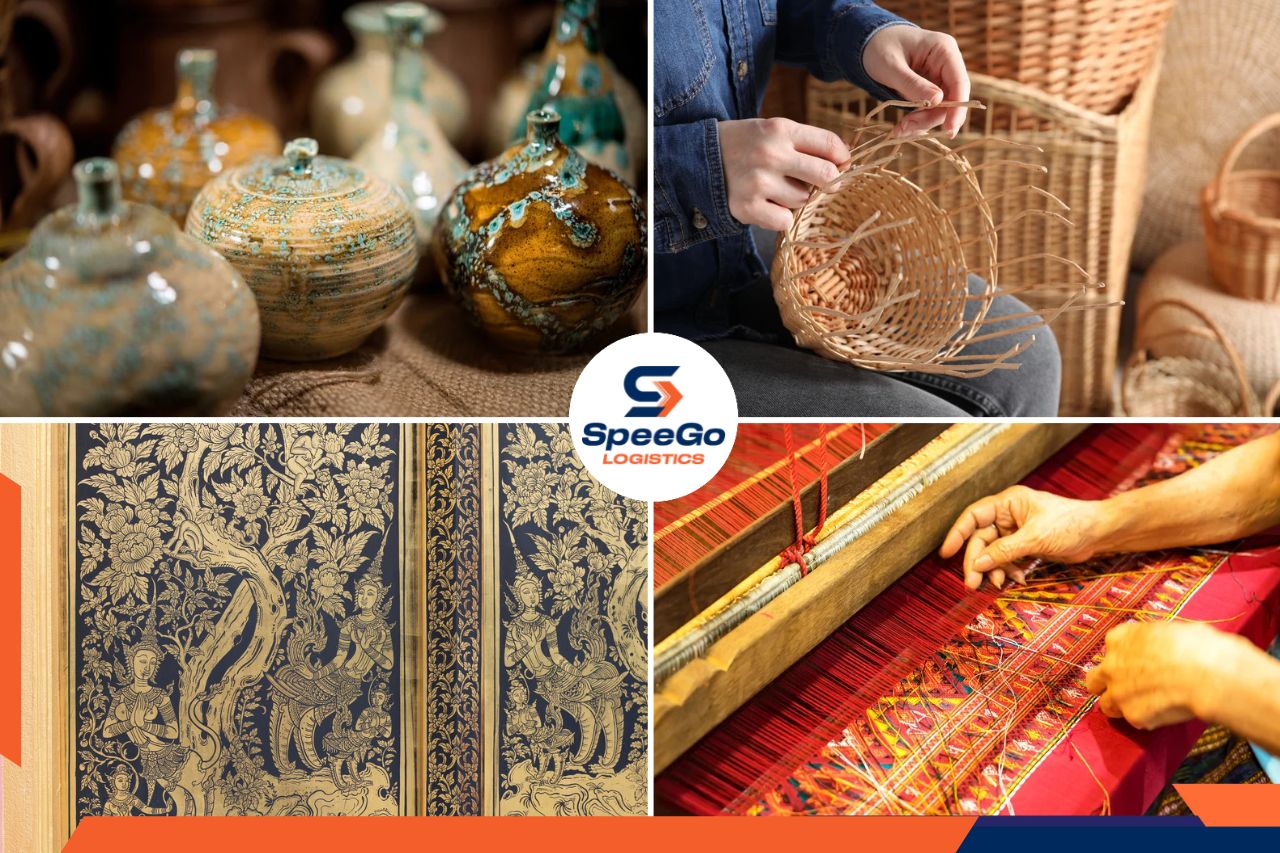
Overview of common imported handicrafts grouped by material and inspection rules
In practice, imported handicrafts are grouped by material. The most common categories are ceramics, lacquerware, carved wood, handwoven textiles (silk and brocade), leather goods, and natural-material products such as rattan and bamboo weaving, mother-of-pearl, and lotus fiber.
Grouping by material helps you position products in the market. It also shows how complex customs clearance will be. Each material brings different inspection standards, such as phytosanitary inspection and CITES certification. Packing and shipping requirements differ too. The table below gives a quick overview of each category.
Product categories that need close control
| Material group | Typical products | Regulatory notes | Shipping risk |
| Ceramics and glass | Vases, teapots, decorative figurines, handmade dinnerware | Food safety rules apply if the item holds food or drink | Very high: fragile, so it needs wooden crates and strict foam cushioning |
| Rattan, bamboo, and lotus fiber | Handbags, lanterns, sedge mats, rattan and bamboo furniture | Phytosanitary inspection is mandatory to guard against insects and mold | Medium to high: prone to mold if the container sweats; bulky, so freight is charged by volume |
| Wood and lacquerware | Wooden statues, lacquer paintings, inlaid trays and boxes | Phytosanitary inspection; check against protected timber lists (CITES) | Medium: lacquer surfaces scratch easily; sensitive to humidity changes |
| Mother-of-pearl and leather | Jewelry, mother-of-pearl inlay boxes, handmade leather bags and wallets | Animal quarantine; proof of legal origin (CITES for rare skins and shells) | Low to medium: genuine leather molds easily if stored poorly |
| Handwoven textiles and silk | Silk fabric, shawls, embroidered art, brocade items | Formaldehyde and aromatic amine testing (textile regulations) | Low: compact and light, but needs moisture and odor protection |
Why consider Vietnam for handicraft sourcing?
Vietnam has a long-established craft village ecosystem and skilled artisans. Importers can find stable supply at competitive costs. Production clusters specialize in ceramics, rattan and bamboo, wood, and more. This keeps quality consistent and lets suppliers handle large orders flexibly.
That capacity is proven in global markets. According to DTiNews and VietnamNet, Vietnam’s wood and wood product exports reached $17.2 billion in 2025. The US, a demanding market, accounted for 54.65% of that total, or nearly $9.5 billion.
SpeeGo Logistics has offices in Hanoi and Ho Chi Minh City. We connect directly with key craft villages. We help importers find reputable factories and handle end-to-end import and export procedures.
What are the import regulations for handicrafts?
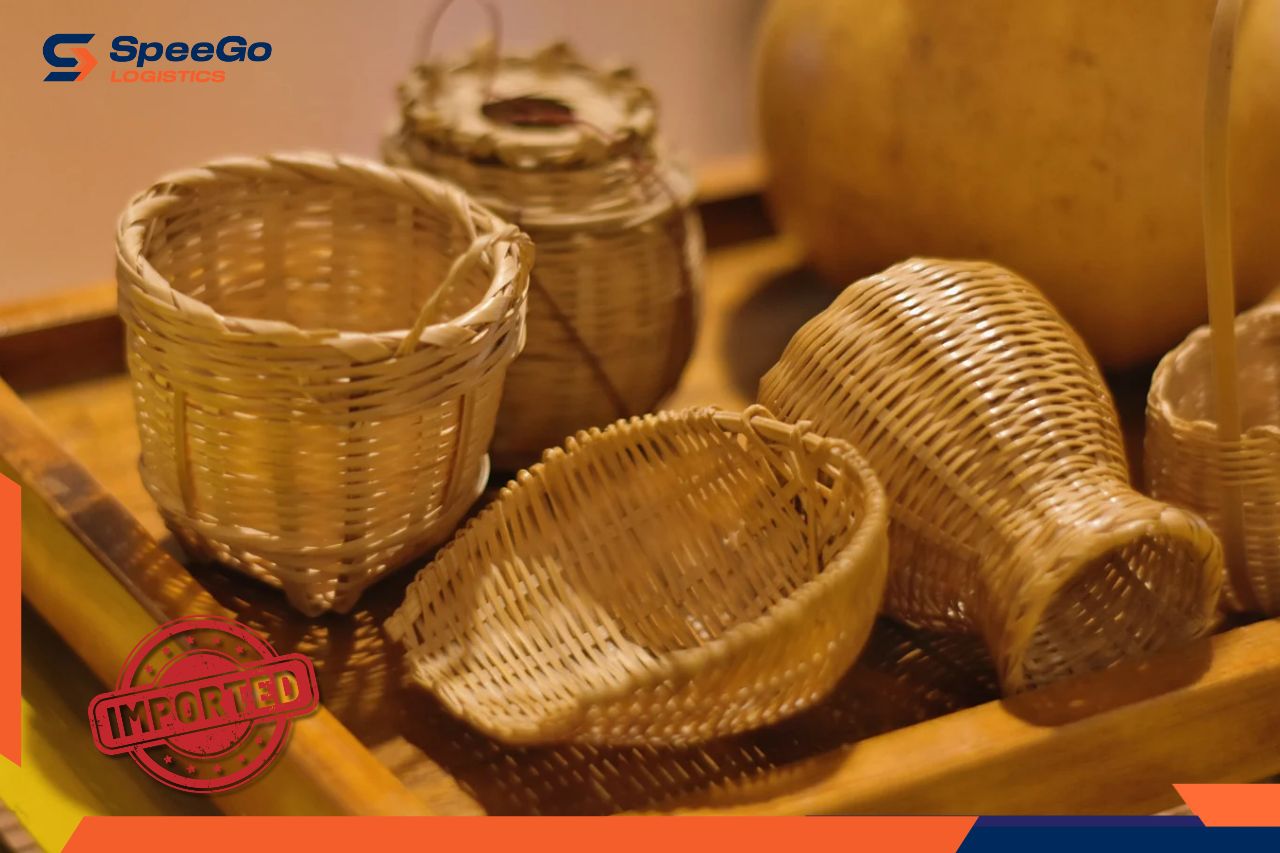
Important procedures to know when importing handicrafts
Handicrafts are handmade, but they face the same strict controls as factory-made goods. Controls focus on three areas:
- Country-of-origin marking and legal entity: Products must show the country of origin in the language the importing country requires, such as English or bilingual English-French. Missing or incorrect marking can lead to additional duties, mandatory relabeling, or re-export. Importers must also register for an importer ID and a customs account in the destination country;
- Legality of raw materials: For products made from natural materials such as wood and bamboo, importers must prove the materials were legally harvested. The US Lacey Act, which targets illegally harvested timber and plants, is a key example. It requires clear declarations of plant species, harvest region, and quantity, so shipments comply with conservation rules;
- Quarantine and biosecurity: To keep out insects and mold, all wooden packaging must meet the international ISPM 15 standard. Products made from wood, rattan, and bamboo usually face specialized inspection. They must also carry a fumigation or heat treatment certificate before clearing customs.
What are the steps to import handicrafts?
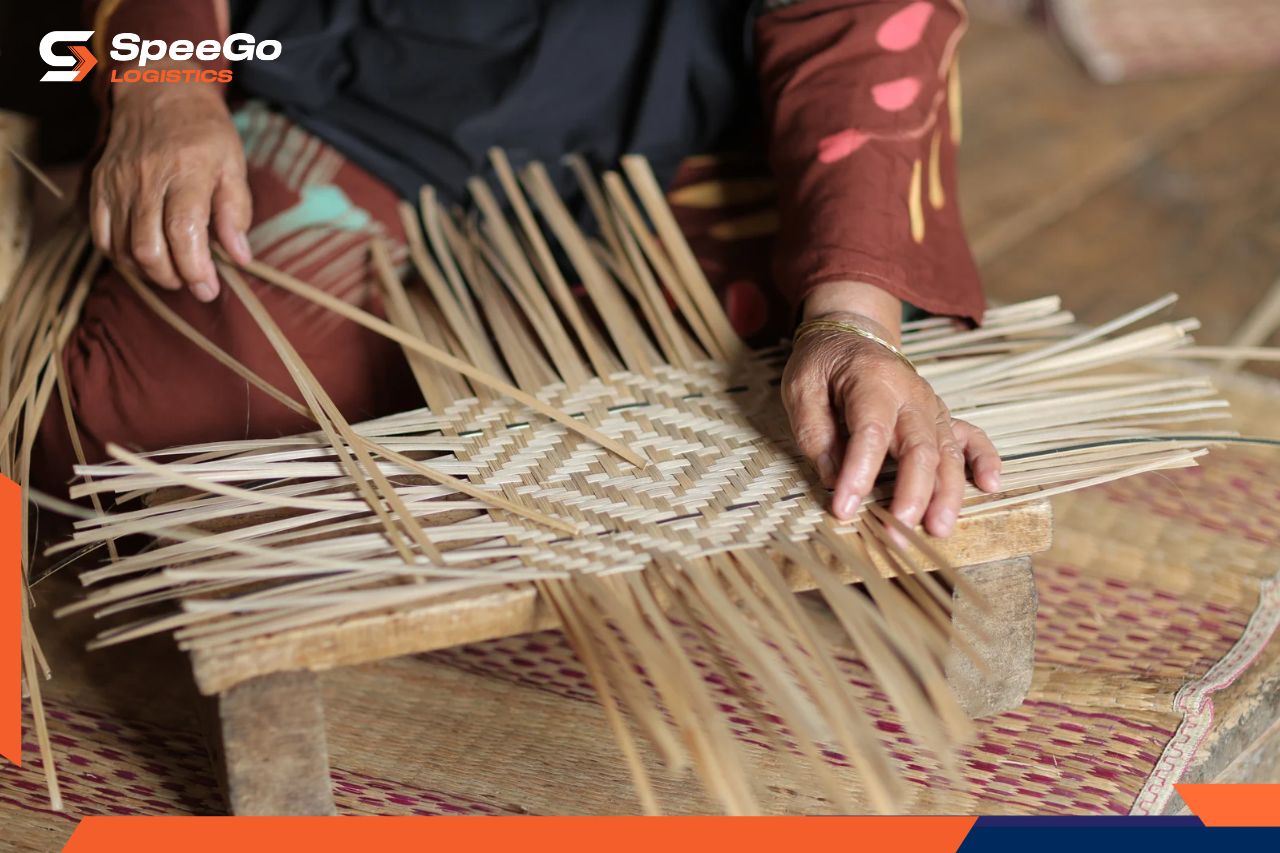
Overview of steps when importing handicrafts
The handicraft import procedure usually has six steps. It runs from sourcing consultation to door delivery.
Below, SpeeGo walks through each step, the documents to prepare, and how a customs broker supports clearance.
The handicraft import process
Industry practice divides a full import transaction into six stages:
- Submit your request and get advice: Define the product types, quantities, and technical standards of your target market. Then get solution advice from a supplier or logistics provider;
- Choose products or order custom designs: Select from the factory’s catalog, or commission custom production;
- Confirm the order and get a quote: Both sides agree on international delivery terms, finalize a detailed quote, and sign the contract;
- Production and quality inspection: The factory makes the products and checks finish quality before shipment;
- Packing, shipping, and customs declaration: Pack the goods, ship them internationally, and file the customs declaration in the importing country;
- Receiving and after-sales support: After clearance, goods move by domestic transport to the buyer’s warehouse. There they are counted and received. After-sales support and warranty policies come from the supplier.
What documents do you need to import handicrafts?
A smooth clearance starts with a complete core document set:
- Commercial invoice: Confirms shipment value and serves as the basis for calculating duties;
- Packing list: Details quantities, packing specifications, and weights;
- Transport documents: A Bill of Lading (sea) or Air Waybill (air), proving the shipping route;
- Certificate of origin: Proves where the goods were made and supports preferential tariff treatment, if available;
- Cargo insurance: Covers financial risk on high-value or fragile shipments.
New importers should work with a professional sourcing and shipping partner to get this set right from the start.
With hands-on experience in handicrafts, the SpeeGo team reviews your full legal file. We help obtain specialized quarantine permits and advise on document standards for each market. This minimizes errors and speeds up clearance.
What does it cost to import handicrafts?
Costs and surcharges you need to know when importing handicrafts
Total import cost includes several items: Factory purchase price; International freight; Insurance; Customs duties; Storage fees; Domestic delivery charges
Understanding this cost structure helps you set budgets, plan contingency funds for cost swings, and build a sustainable import plan.
How to calculate landed cost
In international trade, the total cost of getting goods to the buyer’s warehouse is called landed cost. The formula is:
Landed cost = Product price + Freight + Insurance + Customs duties + Domestic delivery fees
Many businesses lose money because they leave freight and customs costs out of their selling price. Apply this formula to each SKU.
Current shipping rates
Freight rates change constantly by season and carrier. Based on data from August 20, 2026, reference rates from Ho Chi Minh City to Los Angeles are:
- Sea freight, 40-foot container (FCL): $7,870 – $15,408;
- Air freight: About $6 per pound (~$13.2 per kg).
Source: Warp
Because rates vary widely, always request a quote for each specific shipment. SpeeGo Logistics checks your route and returns a detailed quote within 24 hours.
How to reduce import costs
- Consolidate and use sea freight: Combine large orders and ship by sea to lower the per-unit freight rate;
- Use LCL (less-than-container-load): Share container space and cost with other shippers when your volume is small;
- Book early: Book 4 to 6 weeks ahead, avoid peak season, and favor US West Coast ports to save on freight.
Related Articles


FAQ about importing handicrafts
1. Do handicraft importers in Vietnam offer end-to-end support?
Yes. SpeeGo Logistics supports sourcing, quality inspection, shipping, and customs clearance. We serve routes from Vietnam and China to the US, Canada, and Australia.
2. Do you need a license to import handicrafts?
Most handicrafts do not need a special license in the US. However, you must have complete documents and correct country-of-origin marking. Wood and bamboo products must also comply with the Lacey Act and quarantine rules.
3. What costs are involved in importing handicrafts?
Costs include the product price, freight, insurance, duties, and domestic delivery fees. Ask for an itemized quote to avoid surprise charges.
4. How long does it take to import handicrafts by sea?
From Vietnam to the US, FCL sea freight takes 24 to 29 days port to port. Door-to-door delivery takes 37 to 41 days.
5. Do rattan and bamboo products need quarantine inspection?
Yes. Plant-based goods are inspected for pests. They may also require fumigation or heat treatment.
Importing handicrafts takes close coordination between the factory’s production capacity and a professional carrier that handles customs clearance. We hope this guide gives you a full picture, so you can build an efficient import plan and limit unexpected costs.
SpeeGo Logistics provides end-to-end sourcing at the source, quality inspection, shipping, and customs clearance from Vietnam to the US, Canada, Australia, and other key markets.
Contact SpeeGo by hotline or leave your details to get expert support and a fast quote.
