
Nail product quality control: A detailed QC checklist
Nail product quality control is the process of evaluating nail polish, nail care supplies, and nail equipment against safety, durability, and customs clearance requirements before goods ship.
In this guide, SpeeGo walks you through the steps of a cosmetics quality control process, how to inspect gel polish and manicure tools, and which certifications nail products need to clear customs.
Nail product quality control at a glance
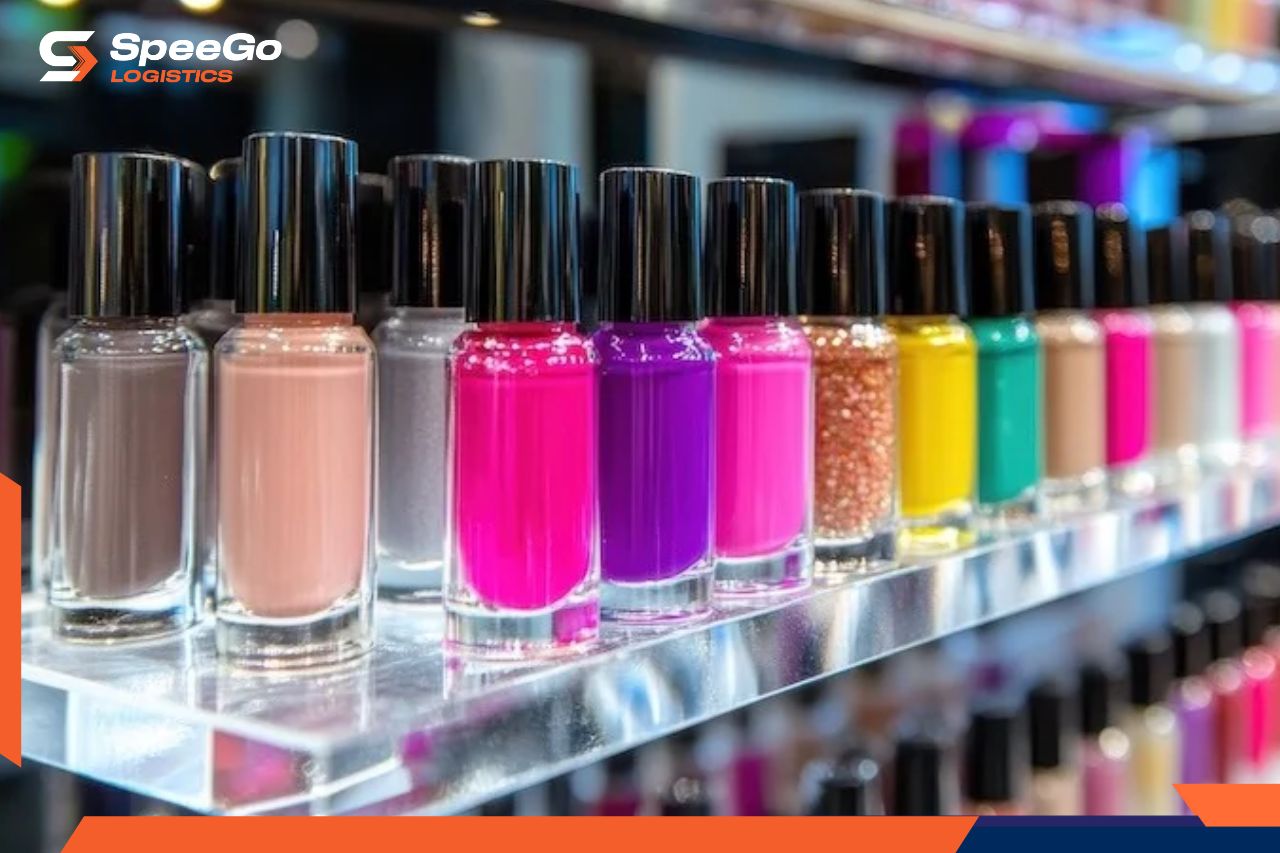
Overview of the quality control process of nail products
Nail product quality control verifies that acrylic and gel products and nail tools meet requirements for formulation, durability, safe use, and compliance documentation. Inspection takes place at three stages: incoming materials, production, and final inspection before the goods leave the factory.
For shipments headed to strictly regulated markets such as the U.S., Canada, and Australia, QC documentation works like a passport. Without inspection records and test documents, a shipment faces a high risk of being held by customs at the port.
What does nail product quality control cover?
A nail care QC checklist typically covers five areas: materials and formulation, appearance and packaging, performance, safety and documentation, and labeling and lot traceability.
Depending on its physical and chemical properties, each nail product category has its own standards and inspection priorities:
| Product category | Inspection focus |
| Gel polish | Color consistency between batches, viscosity (thickness), curing performance (hardening under a lamp), adhesion, and leak resistance |
| Acrylic powder and builder gel | Residual monomer content (unreacted molecules that can cause skin irritation), warning labels, and safe packaging |
| Press-on nails | Appearance, defect rate per AQL (Acceptable Quality Limit), and quality of the included adhesive |
| Nail glue | Viscosity, bond strength, drying time, and shelf life |
| Manicure tools | Material, rust resistance, sharpness, and blade alignment |
| UV nail lamps | Electrical safety, UV radiation safety, and EMC (electromagnetic compatibility, meaning no interference with other devices) certifications |
Who is responsible for nail product quality control?
Quality control for nail supplies is a shared responsibility across three parties:
- Manufacturer: Controls incoming material quality directly and monitors the entire production process;
- Importer or brand owner: Reviews and verifies all documentation and quality certifications before the products go to market;
- Logistics provider (such as SpeeGo): Acts as the last checkpoint by reviewing customs documents and advising on packaging that meets international standards.
Why are nail products often held at customs?
Nail products are frequently held at customs because gel polish, nail lacquer, and acrylic liquids contain volatile solvents. Many of them are classified as dangerous goods in transit.
If a Safety Data Sheet (SDS) is missing or the HS code is declared incorrectly, U.S., Canadian, or Australian customs authorities may hold the shipment for additional inspection.
Having handled thousands of shipments of cosmetics and beauty tools, SpeeGo offers end-to-end import support so your business doesn’t have to manage the paperwork alone. We work with you at every step: verifying QC documentation, advising on international packaging requirements, and speeding up customs clearance to minimize the risk of delays and storage fees.
What are the steps in the qc process for nail products?
End-to-end QC process for nail cosmetics: from incoming raw materials to final shipment
The QC process for nail products runs as a closed loop of six connected stages, from receiving materials to delivery: Incoming materials → Formula mixing → Filling → Packaging → Finished product inspection → Shipment.
In practice, factories group these stages into three main inspection phases to keep every batch consistent.
Incoming quality control (IQC)
This step screens chemicals and raw materials before they enter the production line, catching defects at the preparation stage:
- Gel polish: Check the composition, viscosity, purity, and color accuracy of each batch of base resin, binder, and pigment;
- Nail glue: Check the viscosity, purity, and compatibility of the main adhesive, thickener, and stabilizer.
Buyer tip: Ask the factory for an incoming material inspection report for each batch to use as a reference if issues come up later.
In-process quality Control (IPQC)
This phase monitors mixing and filling directly so that thousands of units in the same batch are identical in quality:
- Environment and equipment control: Reputable factories typically use automatic weighing systems, vacuum mixers (which produce a smooth, bubble-free formula), and automated filling lines in cleanroom conditions;
- Real-time parameter monitoring: Technicians continuously track color during mixing, viscosity, appearance, fill volume, and curing performance under the lamp. Filling machines should also be calibrated regularly and leak-tested.
Final quality control (FQC)
Before cartons are sealed and shipped, finished products go through hands-on testing of performance and packaging:
- Durability and performance testing: The factory measures cure speed, surface hardness, adhesion to the nail, and resistance to heat and cold. Some manufacturers also use centrifuge testing to simulate the vibration of long-haul transport and confirm the product won’t separate into layers;
- Packaging inspection: Each finished bottle must be tightly capped, correctly labeled, and filled to the stated volume before it is packed into export cartons.
What does a gel polish quality control checklist include?
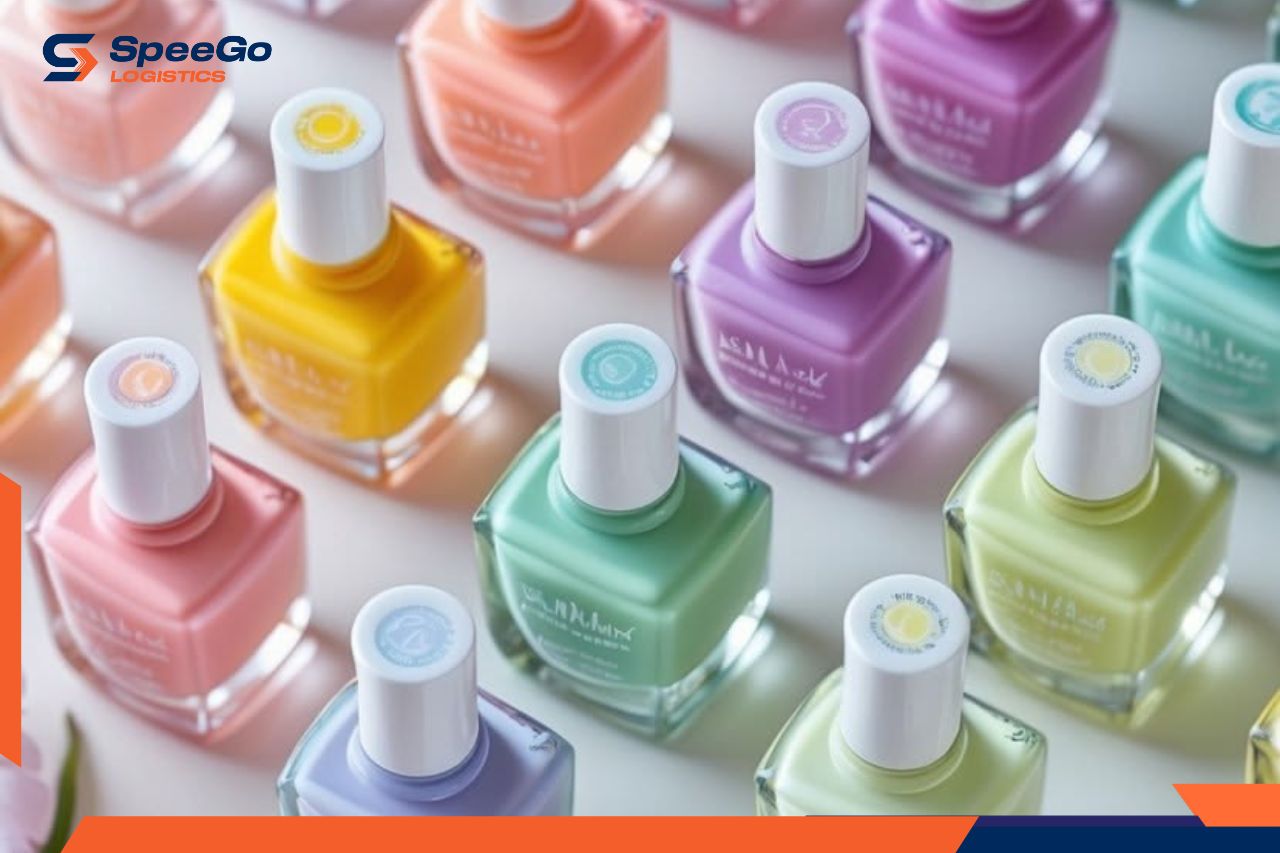
Pre-shipment quality control standards for imported gel polish
To decide whether a batch of gel polish is ready to import, inspect it against eight core criteria: color, viscosity, adhesion, wear resistance, shine, curing under the lamp, stability, and packaging.
Check color and batch-to-batch consistency
- Keep a reference sample: Always retain the originally approved sample bottle to compare against every later production batch, especially custom-mixed colors;
- Compare color correctly: Check under a standard light source. For large color collections, pull a random selection of different shades to test rather than relying on one representative bottle;
- Cat-eye gel polish: Also test with a magnet to check magnetic response, shimmer brightness, and the sharpness of the pattern.
8 – Point gel polish and packaging evaluation table
| Criterion | What to check |
| Color | Accuracy against the master color chart and consistency across batches |
| Viscosity | Thickness of the polish and how smoothly it levels and glides when brushed on |
| Adhesion | How well it bonds to the nail when applied using the standard application procedure |
| Wear resistance | Color retention and resistance to scratches, chips, and peeling during daily wear |
| Shine | Gloss and smoothness of the surface after the top coat is applied |
| Curing (UV/LED) | Whether it cures fully under the recommended lamp |
| Stability | Whether the formula keeps its consistency, with no oil separation or degradation in storage |
| Packaging | Bottles that seal tightly (no leaks, no light getting in to cure the polish) and are labeled correctly |
Common defects and their causes
Gel polish typically shows seven common defects: color mismatch, peeling, air bubbles, inconsistent viscosity, poor curing under the lamp, color separation, and contamination. The main causes are:
- Color mismatch: The factory weighed pigment ratios incorrectly or didn’t mix thoroughly enough;
- Air bubbles and lumpy texture: Incomplete vacuum degassing or air introduced during mixing;
- Poor curing (wrinkling, wet underneath): The lamp wavelength doesn’t match the formula, or the polish was applied too thickly;
- Separation (oil on top or pigment settling): The formula lacks stabilizers, or the product was stored at temperatures that were too hot or too cold.
Note: Peeling is not always a factory defect. Incomplete cuticle prep, insufficient nail buffing, or an underpowered lamp can also cause polish to lift quickly.
What to watch for in acrylic nails, press-on nails, and nail glue quality control
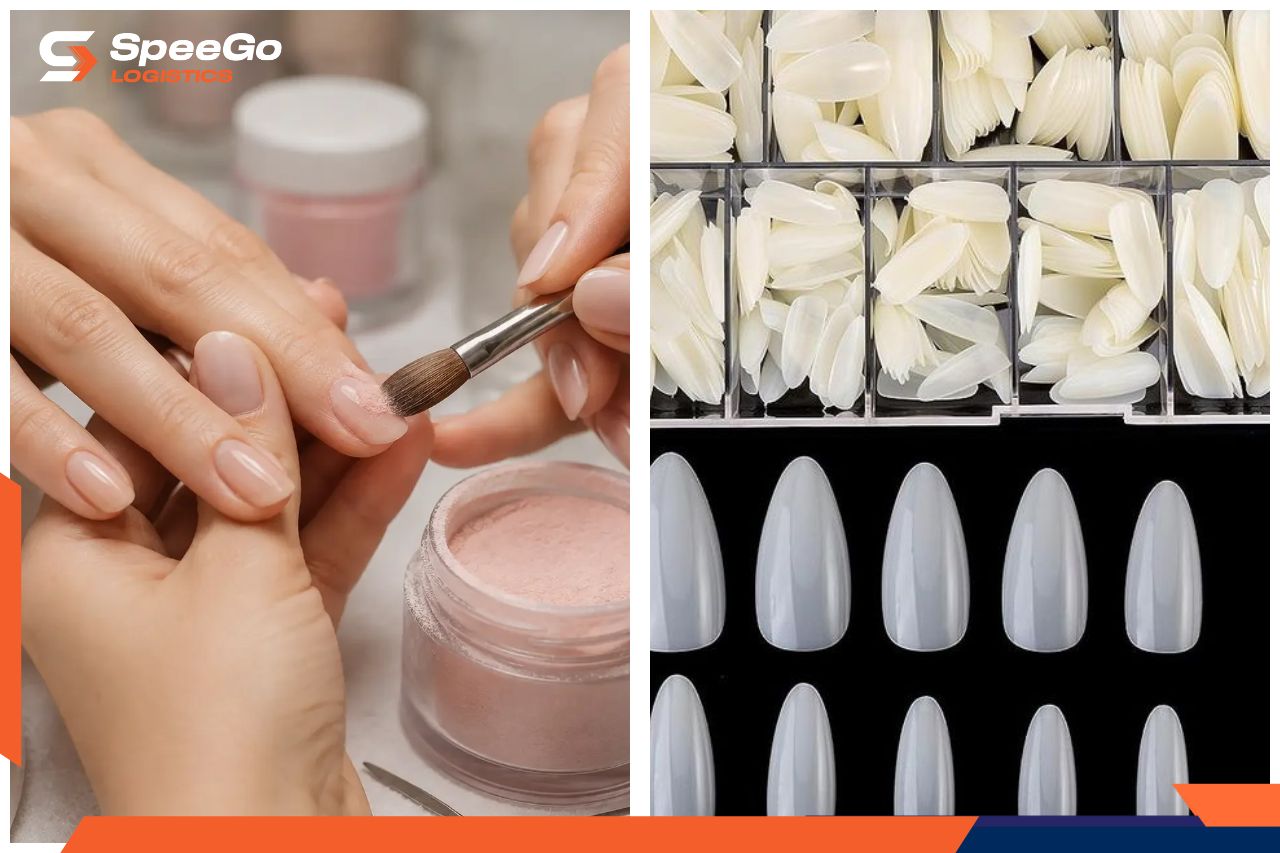
Key quality control standards and inspection criteria for acrylic nails, press-on nails, and nail glue
Each product category carries its own risks, so different inspection standards apply before the goods leave the factory:
| Product category | Core risks and standards | Practical control points |
| Acrylic powder and builder gel | Residual monomer after polymerization can cause skin irritation | Cross-check the formulation against the SDS, have the factory specify the monomer type, and confirm set time and powder fineness in writing |
| Press-on nails | Regulated as cosmetics in the U.S. and EU; inspect by random sampling, with defects classified as critical, major, or minor | Agree with the factory in advance on what counts as a defect (scratches, wrong sizing, etc.) and check the safety of the glue tube included in the box |
| Nail glue | Five control points: material viscosity, mix ratio, bottle leak resistance, bond strength, and clarity; also bubbles, drying time, and shelf life | Ask the factory for video or photos of an adhesion test on the exact batch you are importing, along with a clearly stated production date |
How do you check the quality of manicure tools and UV nail lamps?
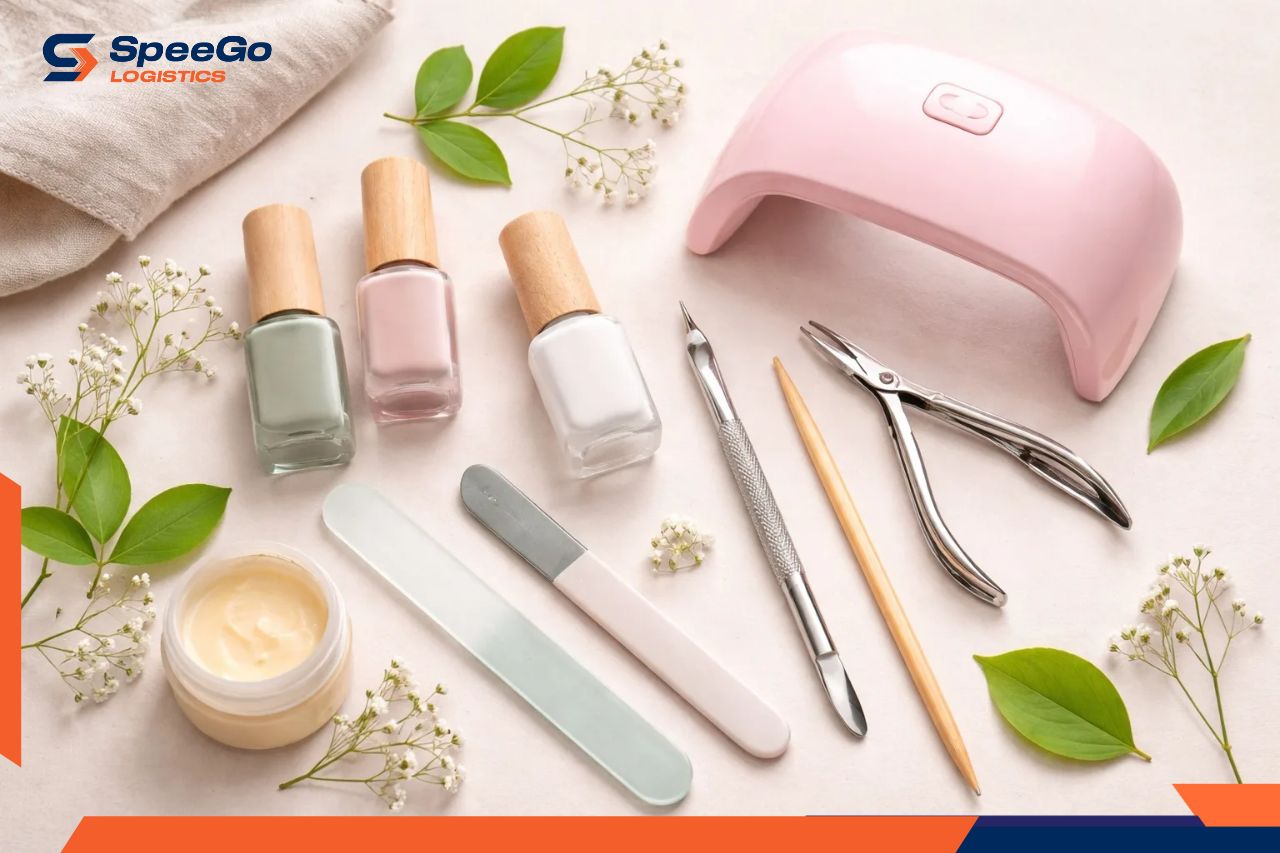
Quality inspection standards and testing procedures for manicure tools and UV nail lamps
| Product category | Core risks and standards | Practical control points |
| Manicure tools (nippers, cuticle pushers, etc.) | Low-grade steel rusts easily, and blades may not align or may dull quickly | Choose products that specify the steel grade or medical-grade stainless steel. Hold nippers up to the light to confirm the blades close completely with no light gap. Pull random samples for a rust-resistance test. |
| Nail accessories (rhinestones, charms, brushes, empty bottles) | Prone to packaging and appearance defects such as leaks, cracked bottles, wrong labels, underfilled volume, or dents in transit | Inspect randomly by batch. For private-label orders, approve physical samples of the label, bottle, cap, color name, and color code before mass production begins. |
| UV nail lamps | Risk of electrical short circuits and UV exposure that can harm eyes and skin | Require certificates issued by reputable testing bodies. Check that the plug and power supply match the destination country. |
What certifications do nail products need to clear customs in the U.S., Canada, and Australia?

Essential customs certifications and compliance documents for importing nail products into the U.S., Canada, and Australia
For smooth customs clearance, your nail shipment must meet the requirements of each destination market. Here are the core documents importers should know.
FDA Requirements (U.S. Market)
The U.S. classifies nail polish, gel polish, and acrylic liquids as cosmetics. The FDA does not require premarket approval, but under MoCRA, manufacturers must register their facilities and list their products.
Companies must also keep safety substantiation records for their products on hand so they can present them immediately if customs asks. Canada and Australia each apply their own national health and cosmetics regulations.
Safety data sheet (SDS)
An SDS is required for every shipment containing flammable ingredients, such as gel polish, regular nail lacquer, or acrylic monomer liquid.
Customs authorities and carriers rely on the SDS to classify the hazard level and approve packaging before a shipment can move by air or sea freight.
REACH Certification (Chemical Safety Standard)
Legally, REACH is a European Union regulation, so it is not required for the U.S., Canada, or Australia.
In practice, however, large importers and international e-commerce platforms often request a REACH-equivalent report. It is their way of confirming your nail products don’t contain restricted hazardous chemicals.
To streamline this process, SpeeGo offers logistics services built for the nail industry, helping businesses review documentation (SDS, FDA) and clear customs quickly into the U.S., Australia, and Canada.
Why are gel polish and acrylic classified as dangerous goods in transit?

Why gel polish and acrylic liquids are classified as Class 3 flammable dangerous goods in air freight
Gel polish, nail lacquer, and acrylic liquids commonly contain ethyl acetate, butyl acetate, or toluene, which are flammable solvents. Under IATA and U.S. Department of Transportation (DOT) classifications, these products fall under Class 3 (flammable liquids), UN1263, and face restrictions on air freight. Source: forward2me
Can gel polish be shipped by air?
Most gel polish is not accepted on standard air freight because it is a flammable liquid.
Some airlines accept it only in limited quantities and in UN-certified packaging. Ocean freight remains the more common choice for bulk shipments.
How should gel polish be packed to prevent leaks in a container?
Gel polish should be packed in UN-certified packaging with cushioning and leak-proof liners between layers. For full container load (FCL) shipments, proper dunnage and pallet securing help reduce movement throughout the ocean voyage.
At SpeeGo, shipments containing gel polish and acrylic on Vietnam – U.S. or China – U.S. lanes receive packaging guidance before the container is loaded, minimizing the risk of leaks during ocean transit.
Related Articles

Frequently asked questions about nail product quality control
1. Is nail polish considered dangerous goods when shipped by sea?
Yes. Nail polish, gel polish, and acrylic typically fall under Class 3 (flammable liquids), UN1263. Ocean carriers still accept these goods when they are packed to UN standards and fully declared.
2. How much does a pre-shipment inspection cost?
Cost depends on the third-party inspection (TPI) company, the size of the order, and the factory location. The larger the order, the lower the inspection cost per unit.
3. How can I tell if gel polish separated during shipping?
Inspect the goods on arrival. Look for color layering, sediment, or a change in viscosity compared with the original sample. If you notice anything unusual, compare it against the temperature conditions during transit.
Nail product quality control runs through the entire chain: incoming materials, production, lab testing, and pre-shipment inspection before the goods leave the factory.
SpeeGo Logistics specializes in shipping from China – U.S./Canada/Australia and Vietnam – U.S./Canada/Australia lanes, serving Vietnamese – American businesses, U.S. – based customers, and Vietnamese sellers selling globally. SpeeGo supports nail industry businesses from sourcing and documentation to flammable-goods packaging advice and shipment tracking.
Contact SpeeGo for a free consultation on importing nail products, or request a quote for your upcoming shipment. Visit the SpeeGo Logistics website for the latest import and export guides.
