
What is Logistics Management? What Are the Key Metrics?
Logistics is not just about getting things done. It also needs to be managed effectively.
A business may hire a reliable transportation provider, but logistics management goes much further. It involves controlling inventory levels, monitoring order fulfillment, measuring operational efficiency, and coordinating the different teams involved in logistics operations.
For businesses with multiple procurement, manufacturing, warehousing, and distribution activities, effective logistics management helps connect every part of the operation into one coordinated system rather than leaving individual departments to work in isolation.
An effective logistics management system can help businesses grow and thrive.
So, what exactly is logistics management? What are its objectives, and which key metrics should businesses pay attention to?
Let’s explore these topics in detail with SpeeGo Logistics.
What Is Logistics Management?
Logistics management is the process of planning, implementing, and controlling the flow of goods and all information related to logistics activities.
Example:
Company A imports goods from China to the United States. The business needs to determine how much inventory to import, when to place orders, which transportation mode to use, how much safety stock to maintain, and how products will be distributed to customers.
Viewed separately, these are all logistics activities. But when a business starts planning, allocating resources, monitoring performance, and coordinating these activities to achieve its business objectives, that is Logistics Management.
Logistics management can be simply understood as the management and coordination of logistics activities.
What Is the Difference Between Logistics and Logistics Management?
Logistics refers to activities involved in the movement and storage of goods, such as transportation, warehousing, inventory management, and order fulfillment.
Logistics Management refers to managing these logistics activities through planning, coordination, performance monitoring, and continuous optimization.
Simply put:
Logistics is about what needs to be done, while Logistics Management is about how to manage those activities to achieve the best possible results.
How Is Logistics Management Different From Supply Chain Management?
Logistics Management focuses on the flow of goods and information across logistics operations.
Supply Chain Management (SCM) focuses on managing the entire supply chain, including raw materials, procurement, manufacturing, logistics, and distribution.
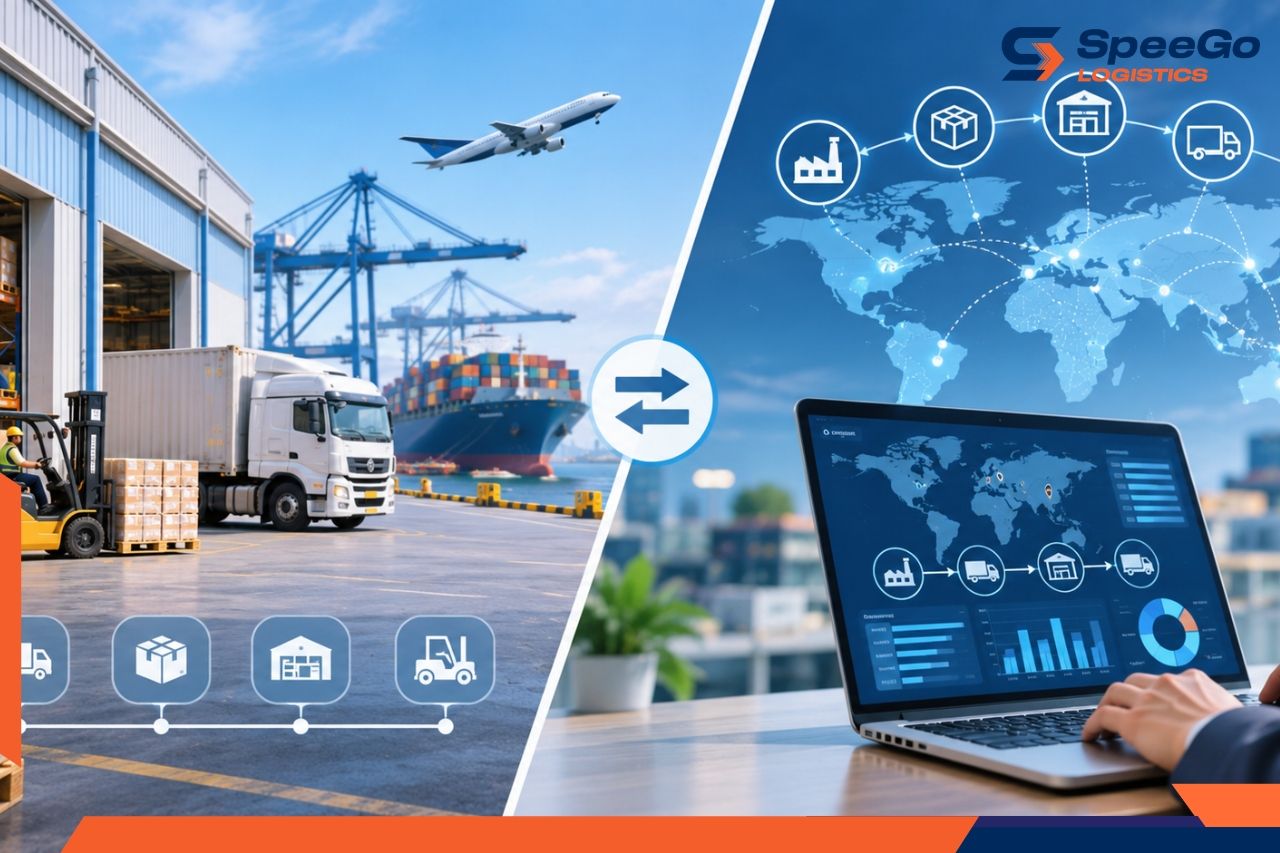
Logistics management and supply chain management are closely interconnected.
Example:
Choosing a shipping route, Air Freight, or Ocean Freight falls under Logistics Management.
Deciding which suppliers to source from, where to manufacture products, and which markets to distribute to falls under Supply Chain Management.
What Activities Does Logistics Management Include?
Logistics Management covers a wide range of activities, from planning product and material requirements to delivering finished products to customers.
Businesses can manage these activities in-house or outsource them to external service providers. Depending on their management needs, they may work with Third-Party Logistics (3PL) or Fourth-Party Logistics (4PL) providers.
Logistics Planning
This activity involves determining the volume of goods to be transported, warehouse capacity requirements, transportation modes, delivery schedules, and other operational needs.
The more detailed and accurate the plan, the easier it becomes for businesses to allocate resources, minimize unexpected costs, and optimize transportation activities.
Procurement and Supply Management

Procurement and the management of suppliers and sourcing are essential.
Businesses need to ensure that goods and raw materials are supplied in the right quantities, at the right time, and by the right suppliers.
This activity is closely connected to Supply Chain Management, especially for businesses working with multiple suppliers and sourcing products from different countries.
Transportation Management
Transportation Management focuses on selecting transportation modes, shipping routes, carriers, schedules, and transportation costs.
For international shipments, businesses may work with multiple carriers and use different transportation modes. Logistics Management helps coordinate these transportation legs so they work together rather than operating independently.
Warehouse Management
Warehouse Management involves organizing warehouse space, assigning storage locations, and managing inbound, outbound, and internal inventory movements.
For businesses with a large number of product SKUs, warehouse layout and storage allocation can significantly affect picking times and order processing efficiency.
Inventory Management
Inventory Management helps businesses determine how much stock they should maintain at different points in time.

An effective logistics management system requires proper inventory control.
The goal is not always to reduce inventory to the lowest possible level.
- If inventory is reduced too much, businesses may face stockouts when demand increases.
- If too much inventory is held, storage and carrying costs will increase.
Order Management
Order Management covers receiving, checking, confirming, and coordinating orders with the relevant departments.
In e-commerce, order management systems can connect with websites, marketplaces, warehouses, and transportation systems to reduce manual work and streamline operations.
Distribution Management
Distribution Management oversees the movement of goods from a business’s warehouses or distribution centers to customers, retail stores, or other sales locations.
For businesses with large distribution networks, decisions need to be made about which warehouse should fulfill each order, which transportation mode to use, and when goods should be dispatched.
Reverse Logistics Management
Reverse Logistics manages the flow of goods from customers back to the business. Examples include product returns and exchanges, defective goods, warranty claims, and product recalls.
This activity is often overlooked, but it can have a significant impact on operating costs and customer experience, particularly in e-commerce.
Related Articles
Technology Used in Logistics Management
Technology is helping Logistics Management move away from processes that rely heavily on spreadsheets and manual communication toward connected systems with centralized data and near-real-time operational visibility.
Depending on their size, order volumes, and the complexity of their logistics operations, businesses may adopt technologies such as WMS, TMS, IoT, and ERP.
Warehouse Management System (WMS)
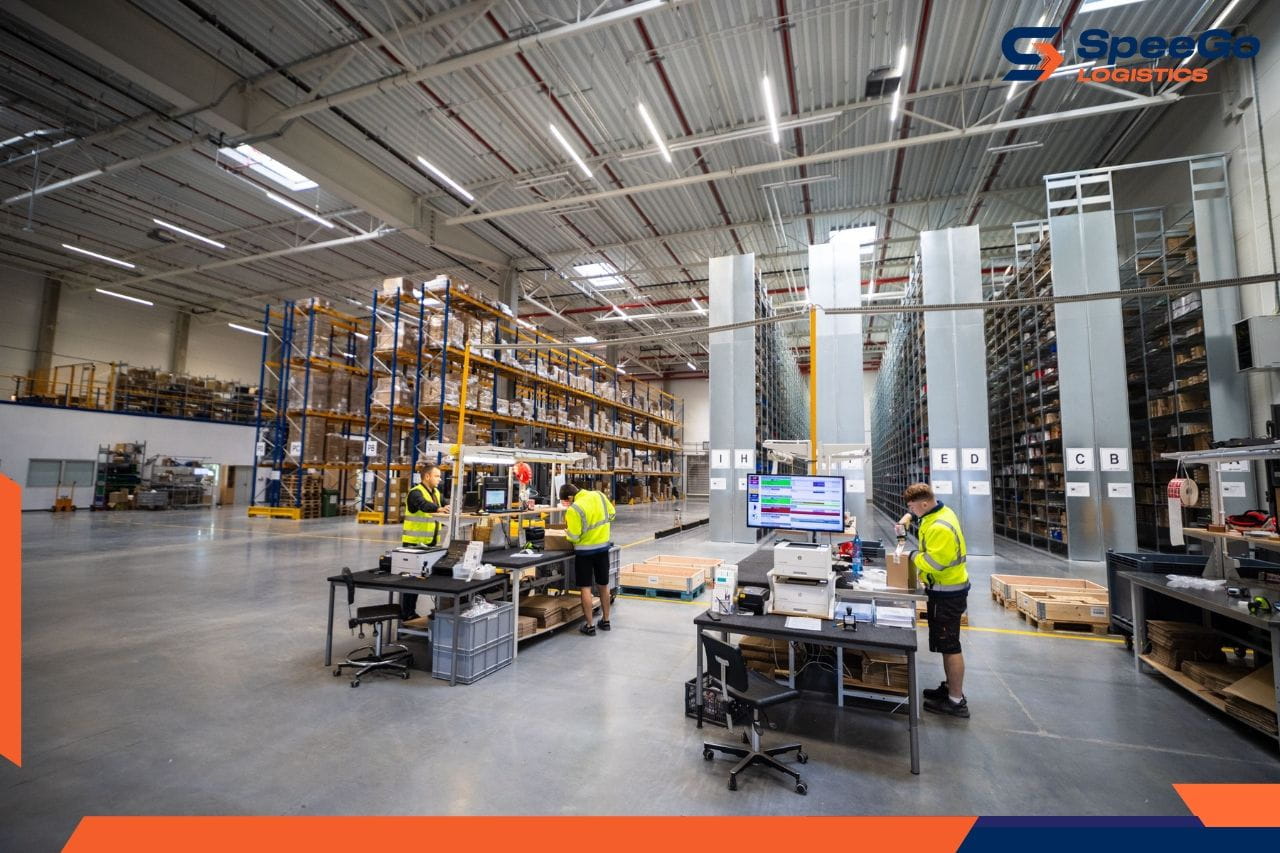
Many warehouses integrate advanced systems and technologies to manage inventory more efficiently.
A WMS is a system used to manage warehouse operations, including receiving, storage, picking, packing, and outbound order processing.
For large businesses managing numerous product SKUs, implementing a WMS is particularly important. It can help them monitor inventory status and control warehouse operations more efficiently.
Transportation Management System (TMS)
A TMS is a system used to manage transportation activities, including route planning, carrier selection, shipment tracking, and transportation cost control.
Instead of managing multiple service providers, files, and email conversations separately, businesses can use a TMS to monitor transportation data centrally through a single system.
Learn more: 100 Essential Logistics Terms You Should Know.
Key Metrics in Logistics Management
A logistics management system cannot be considered effective if a business does not measure its performance.
These KPIs help businesses understand which parts of their operations are performing well, where problems exist, and whether optimization efforts are actually delivering results.
Some of the most important metrics in Logistics Management include On-Time Delivery (OTD), Order Accuracy, Inventory Turnover, Logistics Cost, Order Cycle Time, and Perfect Order Rate.
Let’s take a closer look at what each metric means.
On-Time Delivery (OTD)
OTD measures the percentage of orders delivered within the promised delivery timeframe. A higher OTD rate generally indicates better delivery reliability.
Conversely, a low OTD rate may suggest that the logistics management system is not performing effectively and requires further optimization.

On-Time Delivery (OTD) reflects, to some extent, the effectiveness of a logistics management system.
Order Accuracy
Order Accuracy measures how accurately orders are processed and fulfilled, including whether the correct products, quantities, and delivery information are provided.
A high OTD rate (on-time delivery) combined with a low Order Accuracy rate can still indicate poor logistics performance.
Inventory Turnover
Inventory Turnover measures how frequently inventory is sold or used over a specific period.
In logistics management, this metric helps businesses determine whether inventory is moving efficiently or remaining in storage for too long.
Inventory management also has a direct impact on operating costs. According to APQC, the median inventory carrying cost across its benchmark sample of 6,468 companies is 10% of average inventory value. This highlights why businesses need to balance stock availability with the costs of holding inventory.
Logistics Cost
Logistics Cost measures the total amount a business spends on all activities related to logistics.
An effective logistics management system should not only track total logistics spending but also monitor:
- Cost per order
- Cost per unit or product
- Logistics costs as a percentage of revenue
- Other relevant cost indicators
Order Cycle Time
Order Cycle Time is the total time between receiving an order and completing its delivery.
This metric helps businesses evaluate the entire order fulfillment process rather than measuring transportation time alone.
Example:
SpeeGo Logistics receives a shipping order from Company A for a shipment moving from Vietnam to the United States.
Company A can use Order Cycle Time to measure the total time required for the entire process, including cargo inspection, domestic transportation, customs procedures, ocean freight, and inland transportation to the warehouse.
Perfect Order Rate
Perfect Order Rate (POR) measures the percentage of orders completed without errors, meaning the correct products and quantities are delivered on time and without fulfillment issues.
This is a valuable KPI because it evaluates overall logistics performance rather than focusing on just one stage of the process.
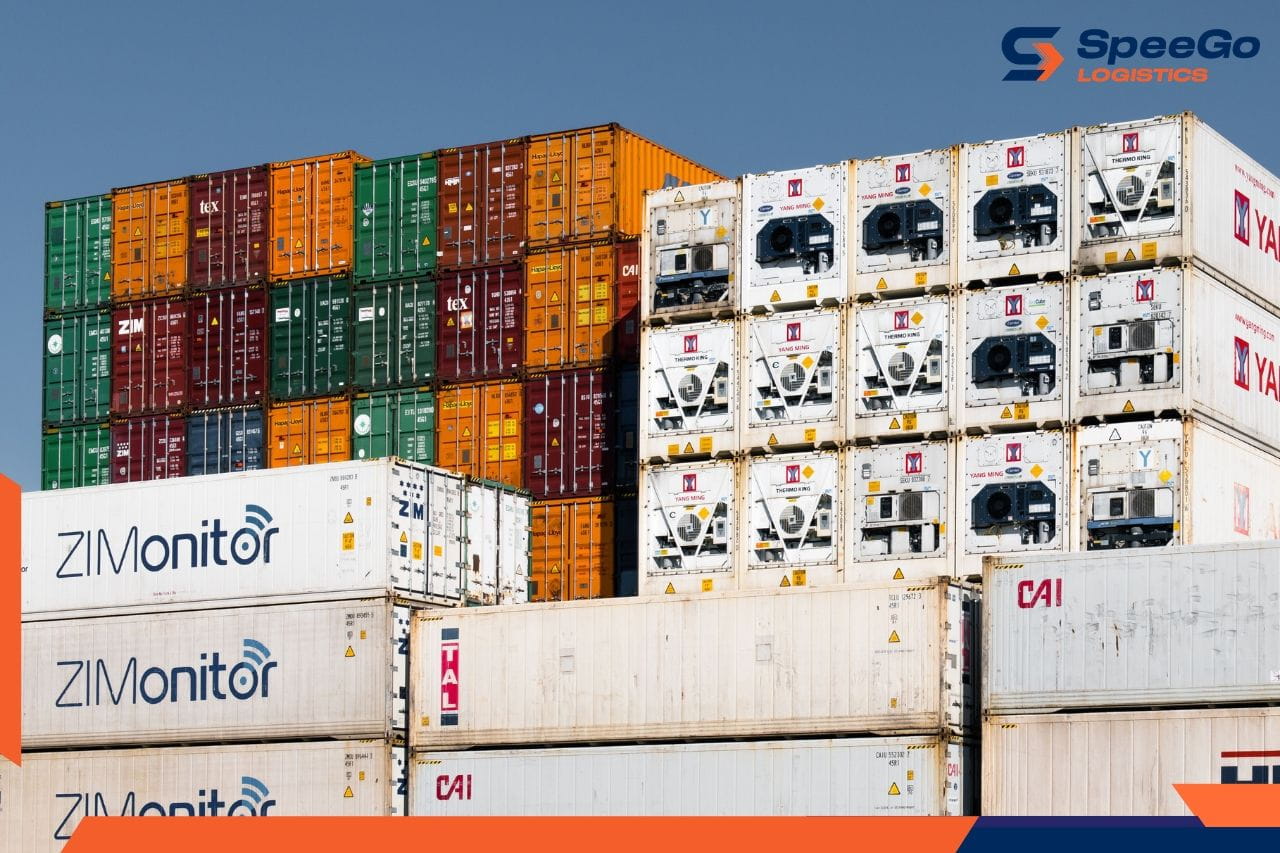
An effective management system is essential for large import-export businesses.
Logistics Management is not simply about tracking trucks, booking vessels, or managing warehouses. It is about coordinating all logistics activities to balance costs, speed, accuracy, and service quality.
When a business is still small, some operations can be managed through internal processes and basic tools. However, as order volumes, product SKUs, warehouses, and target markets grow, data-driven management and performance KPIs become increasingly important.
We hope this guide from SpeeGo has helped clarify what logistics management involves and which metrics businesses should monitor.
Follow SpeeGo Logistics for the latest updates on ocean freight, logistics, and global supply chain management.
